Living Room Decor: 25 Stylish Ideas for Any Home
Published: 14 Oct 2026
The living room is one of the most important spaces in any home. It is where families relax, friends gather, conversations happen, and everyday activities take place. Therefore, choosing the right living room decor can make a significant difference to the comfort, functionality, and appearance of your home. You do not need expensive furniture or a complete renovation to create a beautiful space. With thoughtful furniture placement, coordinated colors, suitable lighting, and carefully selected accessories, you can transform an ordinary room into a welcoming retreat.
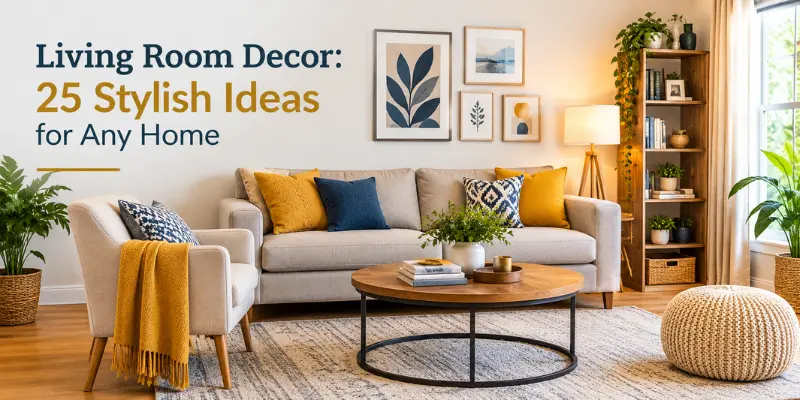
Whether you prefer modern minimalism, traditional elegance, rustic warmth, or contemporary design, the best approach is to create a space that reflects your personality and supports your lifestyle. Moreover, a successful decorating plan balances appearance with practical needs, including storage, movement, maintenance, and budget. These 25 living room decorating ideas will help you make informed decisions and create a stylish space that feels comfortable throughout the year.
1. Choose a Decorating Style That Reflects Your Personality
Before buying furniture or accessories, decide what kind of atmosphere you want to create. A clear decorating style makes it easier to select complementary colors, materials, patterns, and furniture. Without a plan, individual items may look attractive but fail to create a cohesive room.
For example, modern interiors generally feature clean lines, simple furniture, and restrained decoration. Scandinavian-inspired rooms emphasize natural materials, light colors, and comfortable textures. Traditional interiors may include classic wood furniture, elegant fabrics, and decorative lighting, while bohemian spaces often combine plants, colorful textiles, and personal collections.
You do not have to follow one style completely. Instead, choose a primary direction and introduce a few contrasting elements for character. A contemporary sofa, for instance, can work beautifully with a vintage coffee table when their proportions and colors complement each other.
If you are exploring different decorating approaches, read this complete home decor guide to understand the basic principles of creating a coordinated interior. Once you have a clear direction, choosing furniture and accessories becomes much easier.
2. Create a Balanced Color Palette
Color is one of the most influential elements of living room decor because it affects how spacious, warm, calm, or energetic a room feels. Instead of choosing numerous unrelated shades, establish a palette that connects the walls, furniture, flooring, and accessories.
A practical starting point is to select a dominant color, a secondary color, and one or two accent shades. For example, warm white walls, a beige sofa, natural wood furniture, and muted green cushions can create a relaxing atmosphere. Alternatively, navy accents, cream upholstery, and brass details can produce a more dramatic appearance.
Neutral colors are versatile because they work with many furniture styles and can be refreshed easily. However, neutral does not have to mean boring. Different shades of cream, gray, taupe, brown, and white can create depth when combined with contrasting textures.
If you prefer bold colors, introduce them through cushions, artwork, curtains, an accent chair, or a feature wall. This approach allows you to change the room’s appearance later without replacing expensive furniture.
Before painting, test color samples on the wall and observe them at different times of day. Natural light, artificial lighting, flooring, and nearby furnishings can change how a shade appears. Consequently, choosing colors in the actual room is more reliable than selecting them from photographs alone.
3. Arrange Furniture Around a Focal Point
A thoughtful furniture arrangement can improve a living room more dramatically than adding new decorations. Start by identifying the main focal point, which might be a fireplace, television, large window, architectural feature, or striking artwork.
Next, position the sofa and chairs so they relate naturally to that focal point while allowing comfortable conversation. In a social living room, seating should generally face toward one another rather than being pushed against every wall. Nevertheless, the best arrangement depends on room dimensions, entrances, and everyday activities.
Leave clear pathways between doors, seating, and adjoining areas. Avoid blocking windows or placing furniture where it becomes difficult to move around. A coffee table should be accessible from the main seats without obstructing circulation.
For open-plan homes, a sofa, area rug, or console table can help define the living zone without building a wall. In smaller rooms, appropriately sized furniture can create a more comfortable arrangement than several bulky pieces.
For additional practical guidance, explore living room furniture arrangement tips from HGTV. Measure your room and sketch possible layouts before moving heavy furniture or making new purchases.
4. Make a Small Living Room Feel Larger
Small living rooms benefit from deliberate choices that improve movement and reduce visual clutter. The objective is not to make every item tiny; instead, create a layout that feels open while providing enough seating and storage for daily life.
Choose furniture that fits the room’s proportions. A compact sofa with raised legs can appear lighter than a deep, bulky design. Nesting tables, storage ottomans, and wall-mounted shelves can provide useful functions without occupying excessive floor space.
Mirrors can reflect light and create a greater sense of depth when positioned thoughtfully. Similarly, light-colored walls, simple window treatments, and a consistent palette can help the room feel less fragmented. However, darker colors can also look attractive in a small space when used intentionally.
Keep surfaces organized and avoid covering every wall with decorative objects. A few well-positioned pieces often create a calmer impression than numerous unrelated accessories.
Vertical space is particularly valuable. Tall shelving, appropriately positioned curtains, and artwork arranged with suitable spacing can draw attention upward. Before purchasing anything, consider whether rearranging your existing furniture could solve the problem.
For more inspiration beyond the living room, explore these practical home decor ideas and adapt the suggestions to your available space.
5. Select a Sofa That Fits Your Lifestyle
The sofa is often the largest piece of furniture in the living room, so it strongly influences both appearance and functionality. Consider how many people regularly use it, whether you entertain guests, and how much floor space is available before selecting a design.
A compact two- or three-seat sofa may suit an apartment, while a sectional can provide generous seating in a larger family room. However, a sectional is not automatically the best option for every space. Measure its complete dimensions, including the chaise, and check that it will fit through entrances and hallways.
Fabric selection matters as well. Households with children or pets may prefer durable upholstery that is easy to clean. Leather and performance fabrics can be practical options, although their comfort and maintenance requirements vary. Before purchasing, review cleaning instructions, construction details, and warranty conditions.
Neutral upholstery offers flexibility because cushions, throws, and rugs can introduce changing colors. Alternatively, a colored sofa can become an attractive focal point when the rest of the palette is relatively restrained.
Finally, prioritize comfort. Seat depth, back support, arm height, and cushion firmness affect everyday use far more than appearance alone. A beautiful sofa should support the way you actually live.
6. Use Rugs to Define the Living Area
An area rug adds softness, introduces texture, and visually connects furniture. In an open-plan room, it can also establish the boundaries of the living area without separating it physically from the dining space or kitchen.
One common decorating mistake is choosing a rug that is too small. A tiny rug floating beneath the coffee table can make the furniture arrangement feel disconnected. Whenever possible, select a size that allows the front legs of the sofa and chairs to rest on the rug.
For a unified appearance, choose a rug that includes at least one color already present in the room. Patterned rugs can introduce personality, while solid or subtly textured designs work well in spaces that already contain busy fabrics or artwork.
Consider practical requirements before making a purchase. High-pile rugs can feel luxurious but may be harder to maintain in high-traffic areas. Flatweave designs may be easier to clean, depending on the material and construction. A suitable rug pad can improve stability and help prevent slipping.
Measure the seating arrangement first, then compare the rug dimensions with the available floor area. This simple step helps ensure the rug supports the layout instead of becoming an isolated decoration.
7. Layer Lighting for a Welcoming Atmosphere
Lighting should support several activities, including reading, conversation, entertaining, and relaxing in the evening. A single ceiling light rarely creates the most comfortable atmosphere for every situation. Instead, combine general, task, and accent lighting.
General lighting illuminates the room overall. Task lighting provides focused illumination for reading or working, often through a floor lamp or table lamp. Accent lighting highlights artwork, shelving, plants, or architectural details.
Use different light sources at different heights to create depth. A floor lamp beside a sofa, a table lamp on a console, and discreet accent lighting can make the room feel more inviting than a bright overhead fixture alone.
Bulb color temperature also matters. Warm-white light is often suitable for relaxing spaces, while neutral or cooler light may be useful for particular tasks. The best choice depends on personal preference, wall colors, and the activities taking place.
Where possible, use dimmers or separate switches so you can adjust the atmosphere throughout the day. You can also consult ENERGY STAR’s guide to LED lighting when comparing efficient lighting options.
Good lighting is not merely decorative. It improves usability, highlights carefully selected furnishings, and helps the room adapt to changing needs.
8. Decorate Walls With Art and Personal Objects
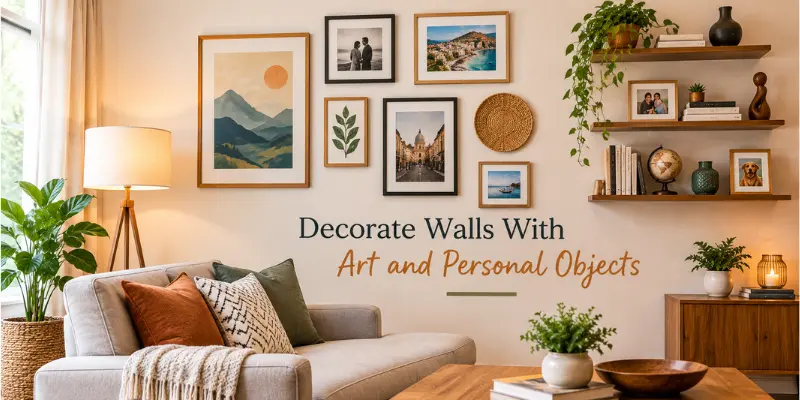
Bare walls can make a living room feel unfinished, but filling every available space is rarely necessary. Instead, choose artwork, photographs, framed prints, wall shelves, or decorative mirrors that complement the room’s scale and style.
A large artwork above a sofa can create a clear focal point. Alternatively, a gallery wall can display several photographs or prints in a coordinated arrangement. To keep a gallery wall organized, repeat a frame finish, color family, or visual theme.
Artwork should relate to the furniture beneath it. A very small picture above a long sofa can appear disconnected, while an oversized piece may overwhelm a narrow wall. Lay out a proposed arrangement on the floor before hanging anything, and measure carefully.
Personal objects make a space feel distinctive. Travel photographs, handmade crafts, favorite books, and meaningful keepsakes can tell a story without requiring expensive purchases. Arrange them in small groups and leave enough empty space around them to remain visually clear.
For more inspiration, read this wall decor ideas guide. Apply the principles that suit your room rather than copying an entire display from another home.
9. Add Cushions and Throws for Texture
Soft furnishings are among the simplest ways to refresh living room decor without replacing major furniture. Cushions and throws introduce color, pattern, softness, and seasonal flexibility.
Start by choosing fabrics that complement the sofa and rug. Linen, cotton, wool, velvet, and knitted materials offer different textures, although their suitability depends on climate, maintenance, and personal comfort. Combining a few contrasting textures can make a neutral room feel more interesting.
Vary cushion sizes to create a relaxed arrangement, but avoid filling every seat with decorative pillows that must be moved whenever someone sits down. A balanced selection is usually more practical than an excessive collection.
Throws can be folded over an armrest, placed casually across the sofa, or stored in a basket nearby. Besides adding visual warmth, they provide an easy layer for cooler evenings.
You can also rotate cushion covers according to the season or your changing preferences. Light fabrics and fresh accents may feel appropriate in warmer months, while deeper colors and heavier textures can make a room feel cozier in colder weather.
The key is coordination. Accessories should contribute to the overall palette rather than compete with every other element in the room.
10. Bring Nature Indoors With Plants
Plants can introduce color, organic shapes, and a sense of freshness into living room decor. Their varied leaf patterns also contrast beautifully with straight furniture lines and smooth surfaces.
Choose plants according to the amount of natural light available and the time you can devote to maintenance. Some varieties tolerate lower light better than others, but no plant should be assumed to thrive in a dark corner without suitable conditions.
A large floor plant can soften an empty corner, while smaller plants can sit on shelves or side tables. Grouping plants at different heights may create a more natural display, provided the arrangement does not block pathways or crowd useful surfaces.
Planter selection is another design opportunity. Ceramic, woven, terracotta, and simple neutral pots can each complement different interior styles. Repeating one or two planter materials helps the display look coordinated.
If you have pets or young children, check whether a plant is toxic before bringing it home, and place potentially hazardous varieties out of reach. Also consider drainage, watering needs, and the possibility of water damage to wooden furniture.
If maintaining live plants is impractical, quality artificial greenery can provide a similar visual effect. Choose realistic shapes and keep the display clean so it remains an intentional part of the room.
11. Style Coffee Tables and Side Tables
Coffee tables and side tables offer practical surfaces, but they also provide opportunities to express personal style. A well-arranged table can connect the room’s colors, textures, and decorative themes.
Begin with a small number of objects that vary in height and shape. For example, a tray, a short stack of books, and a small vase can create a balanced arrangement. A sculptural object or candle holder may add interest, provided it does not make the table difficult to use.
Trays are particularly useful because they group smaller objects together. They can also be moved easily when you need more surface space. In a busy household, leave enough room for drinks, remotes, and everyday essentials.
Scale is important. A tall arrangement can obstruct conversation across the table, while too many tiny objects can appear cluttered. Try to maintain a clear relationship between the table, sofa, and surrounding seating.
For family rooms, choose accessories that are durable and stable. Avoid fragile objects on low tables if young children frequently play nearby.
Above all, remember that styling should support daily living. A decorative table is most successful when it looks attractive and remains useful.
12. Introduce Curtains and Window Treatments
Window treatments influence privacy, daylight, color, and the perceived height of a room. Curtains can soften hard architectural edges, while blinds and shades provide a streamlined alternative.
Before choosing a style, decide how much light control and privacy you need. Sheer curtains allow daylight to filter through, whereas lined curtains can provide greater privacy and light reduction. Blackout options may be useful in particular circumstances, although they are not necessary for every living room.
For a taller appearance, curtains are often installed higher than the top of the window, provided the ceiling and surrounding architecture allow it. Wider placement can also help the window feel more substantial when the panels are open.
Fabric and color should relate to the rest of the room. Neutral curtains can blend into the background, while patterned or richly colored panels can create a decorative feature.
Measure both the window and the intended curtain length before purchasing. Account for the rod, hardware, desired fullness, and whether the panels should touch the floor or finish slightly above it.
If your room receives strong sunlight, consider how fabrics may fade over time. Appropriate lining and regular maintenance can help preserve their appearance.
13. Create a Feature Wall Without Overdoing It
A feature wall adds visual emphasis to one part of the room. Paint, wallpaper, textured finishes, wood panels, or carefully arranged artwork can all serve this purpose.
First, choose a wall that naturally attracts attention, such as the area behind the sofa or a wall that frames the television. The feature should strengthen the existing layout rather than compete with windows, doors, or architectural details.
A deeper paint color can create contrast against lighter surrounding walls. Patterned wallpaper may add energy, while wood or textured finishes can introduce warmth. However, the right choice depends on the room’s light, furniture colors, and overall style.
Keep the rest of the room relatively balanced. If the feature wall contains a bold pattern, simpler cushions and understated accessories may help prevent visual overload.
For renters, removable wallpaper, freestanding screens, and artwork can offer alternatives to permanent changes. Always check lease requirements before painting or installing fixtures.
The aim is to establish a focal point, not to make every wall compete for attention. A thoughtful feature wall can add character while preserving a calm atmosphere.
14. Make Storage Part of the Design
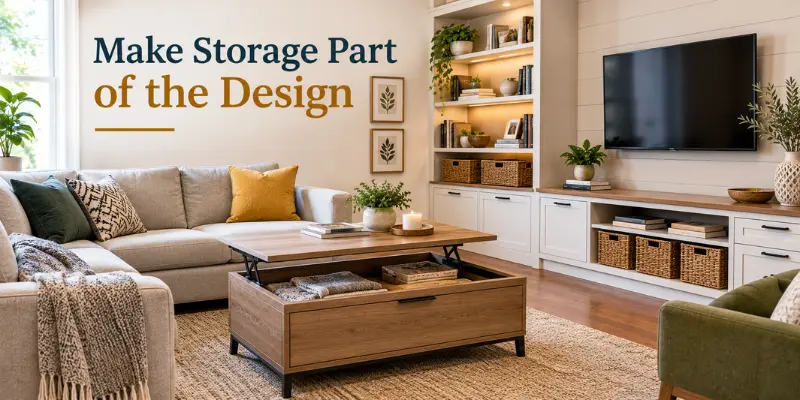
Clutter can undermine even carefully planned living room decor. Smart storage helps maintain a comfortable environment while allowing the room’s most attractive features to stand out.
Consider furniture that provides more than one function. Storage ottomans can hold blankets, baskets can organize toys, and sideboards can conceal everyday items. Wall shelves provide display space, although they should not become overloaded with unrelated objects.
Use closed storage for items that you do not need to see regularly. Open shelving works well for books and selected decorative objects, but it usually looks better when the display includes empty space and a consistent visual rhythm.
Create a simple system for frequently used belongings, including remote controls, chargers, magazines, and children’s toys. When everything has a designated place, tidying becomes easier and surfaces remain more usable.
Choose storage according to the room’s dimensions. A large cabinet can be useful in a spacious room but may dominate a compact apartment. In smaller spaces, vertical shelving and furniture with hidden compartments can provide additional capacity without consuming too much floor area.
Good storage is not separate from design. It helps the room feel more spacious, organized, and relaxing.
15. Use Mirrors to Reflect Light and Space
Mirrors are useful decorative elements because they can reflect daylight, highlight attractive views, and create a greater sense of depth. Their impact depends largely on placement.
A mirror opposite or adjacent to a window may reflect natural light into the room. However, check what it reflects before installing it. A mirror that faces an attractive garden or artwork can enhance the view, while one reflecting clutter may draw attention to it.
Choose a size and frame that suit the room. A large mirror can make a strong statement, whereas a collection of smaller mirrors can create a more decorative arrangement. Round mirrors can soften rooms dominated by rectangular furniture, while geometric frames may suit contemporary interiors.
Secure heavy mirrors using suitable hardware and follow the manufacturer’s installation guidance. In homes with children, take particular care with placement and mounting.
Although mirrors can make a room feel more open, they do not physically increase floor space. Combine them with sensible furniture placement, clear pathways, and appropriate lighting for the best overall result.
16. Choose Accessories With Purpose
Decorative accessories provide the finishing touches that make a room feel personal. These may include vases, bowls, candles, books, sculptures, framed photographs, and handmade objects.
However, buying too many accessories can create clutter and make it difficult to appreciate individual pieces. Start with the items you already own, identify what complements the room, and add only what is missing.
A useful approach is to group objects in odd numbers when it produces a natural arrangement, vary their heights, and repeat a few colors or materials. These are flexible styling guidelines rather than strict rules, so adjust them to suit the furniture and available space.
Meaningful objects often have greater value than generic decorations. A handmade vase, a family photograph, or a souvenir from a memorable trip can give the room a stronger identity.
Pay attention to maintenance as well. Delicate objects may require frequent dusting, while open shelves can collect dust more readily than closed cabinets.
Before purchasing a decorative item, consider where it will go and whether it supports the room’s overall design. Intentional choices usually create a more polished result than buying accessories simply because they look attractive in isolation.
17. Try Modern Minimalist Living Room Decor
Minimalist interiors emphasize simplicity, practical furniture, clear surfaces, and carefully selected decorative details. This style can work particularly well when you want a calm room that is easy to maintain.
Begin with a limited color palette and furniture that performs its intended function without unnecessary ornamentation. Natural wood, neutral upholstery, simple lighting, and a few carefully chosen accessories can create visual interest without overwhelming the space.
Minimalism does not mean eliminating comfort or personality. A textured rug, a favorite artwork, a sculptural lamp, or a well-placed plant can make the room feel welcoming while preserving its uncluttered appearance.
Storage is especially important because everyday items can quickly disrupt the look of a minimalist room. Use cabinets, baskets, or multifunctional furniture to keep frequently used belongings organized.
Resist the temptation to remove every contrasting color or material. A small amount of variation can make the room feel more natural and lived-in.
The best minimalist living room is not an empty showroom. It is a practical space in which each item has a purpose and the overall arrangement feels balanced.
18. Create a Cozy Rustic or Farmhouse Look
Rustic and farmhouse-inspired rooms emphasize natural materials, comfortable furnishings, and a relaxed atmosphere. Wood, woven textures, soft fabrics, and earthy colors can help create this feeling without requiring an elaborate renovation.
Introduce natural wood through a coffee table, shelves, picture frames, or small decorative objects. Pair these elements with neutral upholstery, textured cushions, and a rug that adds softness underfoot.
For a farmhouse-inspired look, consider simple silhouettes, practical storage, understated patterns, and a few vintage-style accessories. Rustic interiors can also incorporate modern lighting or contemporary artwork to prevent the room from feeling overly themed.
Avoid combining too many distressed finishes, signs, and decorative objects that imitate the same style. A more restrained selection often feels more authentic and easier to live with.
If you are working with a limited budget, start with textiles and smaller accessories before replacing major furniture. Reusing a wooden table, updating cushion covers, or adding warm lighting can change the atmosphere considerably.
The goal is to create a room that feels comfortable, personal, and durable rather than one that follows a rigid decorating formula.
19. Add Personality With Contemporary Decor
Contemporary living room decor can combine clean-lined furniture, expressive artwork, contrasting materials, and carefully controlled color. Unlike a fixed historical style, contemporary interiors evolve as preferences and design approaches change.
Start with a functional layout and a few substantial furniture pieces. Then introduce visual interest through a sculptural lamp, an unusual side table, bold artwork, or a distinctive accent chair.
Mixing materials can create depth. Wood, metal, glass, natural textiles, and stone-inspired surfaces each contribute different qualities. However, repeat selected materials or finishes so the overall arrangement remains connected.
A neutral background can support a stronger accent color, while a colorful sofa or artwork can become the focal point in a simpler room. Choose one or two prominent features instead of giving every object equal attention.
Contemporary rooms can also benefit from personal collections and handmade objects. Combining new furnishings with meaningful pieces prevents the space from feeling generic.
For further inspiration, explore these current home decor trends, then select ideas that suit your lifestyle rather than following every trend.
20. Decorate Around a Television or Fireplace
Televisions and fireplaces often become the main focal point of a living room. Their placement can therefore influence furniture arrangement, lighting, artwork, and accessory selection.
If the television is the primary focus, position seating at a comfortable viewing distance and avoid excessive decorative objects around the screen. Hide visible cables where practical, and use a media console or suitable wall-mounted solution that fits the room.
A fireplace can provide a natural gathering point. Arrange seating to encourage conversation while maintaining safe clearance around the fireplace and following the manufacturer’s instructions. Heat-sensitive decorations, curtains, and furniture should remain at appropriate distances.
When a room includes both features, decide whether one should dominate or whether the layout can accommodate both comfortably. In some spaces, angled seating or separate conversation and viewing zones may work better than forcing every seat to face the same direction.
Keep the surrounding wall balanced. Artwork, shelving, or a simple mantel arrangement can add character, but avoid overcrowding the area with objects that compete for attention.
Function should come first. A visually attractive arrangement is successful only when it supports comfortable viewing, conversation, and safe everyday use.
21. Improve an Open-Plan Living Room
Open-plan living areas combine activities such as relaxing, dining, cooking, and entertaining in a shared space. The main decorating challenge is to establish distinct zones while preserving a sense of continuity.
Begin by identifying how each area will be used. A sofa and rug can define the living zone, while a dining table and pendant light can distinguish the eating area. Furniture placement, lighting, and carefully selected storage can create subtle boundaries without blocking the room.
Use a coordinated color palette throughout the space. The living and dining areas do not need identical furnishings, but repeated materials, complementary colors, and consistent finishes can help them feel connected.
Consider movement between zones. Leave adequate space around dining chairs, entrances, and main walkways. Avoid positioning furniture where it interferes with kitchen access or creates awkward routes through the room.
Lighting is especially useful in open-plan homes because different activities require different levels of illumination. Separate controls allow you to brighten the dining table while keeping the living area softer in the evening.
Finally, manage visual clutter across the entire space. Since open-plan rooms are visible from several directions, organized surfaces and practical storage make a noticeable difference.
22. Refresh Your Living Room on a Budget
You do not need to replace expensive furniture to improve your living room. A planned refresh can deliver meaningful results by focusing on the areas that have the greatest visual impact.
First, rearrange existing furniture and remove items that no longer serve a purpose. This costs nothing and can improve the room’s flow immediately. Next, clean windows, lampshades, rugs, and upholstery according to their care instructions so that existing furnishings look their best.
Then identify one or two affordable changes. New cushion covers, a throw, updated lampshades, framed prints, or a carefully chosen plant can introduce a fresh color palette. Painting a suitable wall may also create a noticeable change, provided the surface and finish are appropriate.
Set a budget before shopping and prioritize items according to need. For example, replacing a worn-out lamp may be more useful than buying another decorative object. Compare dimensions, materials, care requirements, and return policies rather than choosing solely on price.
For additional inspiration, read these home decor ideas and adapt the suggestions to your budget. You can also explore living room design ideas for different budgets from HGTV.
You can also repurpose items from other rooms. A small table, framed print, or decorative bowl may work beautifully in a different location.
A successful budget makeover depends on thoughtful decisions, not the number of purchases. Start with the existing room, establish what needs improvement, and spend only where the change will make a meaningful difference.
23. Make the Living Room Family-Friendly
A family-friendly living room should support relaxation, play, conversation, and everyday organization. The best design balances comfort and durability with an appearance that still feels attractive.
Choose furniture with upholstery suited to your household’s cleaning needs. Removable cushion covers, washable textiles, and surfaces that tolerate regular use can simplify maintenance. However, always follow the manufacturer’s care instructions before using cleaning products.
Provide storage for toys, books, games, and other frequently used belongings. Baskets and closed cabinets make it easier to tidy the room quickly without requiring every item to remain hidden permanently.
Arrange furniture to maintain clear walkways and reduce collision hazards. Secure tall furniture and heavy televisions appropriately, and keep cords, unstable objects, and fragile decorations away from areas used by young children.
If pets share the space, consider fabrics that are easier to clean and materials that tolerate everyday wear. A designated basket for pet toys or blankets can help keep the room organized.
Family-friendly design does not have to look utilitarian. Coordinated colors, attractive storage, comfortable seating, and a few personal accessories can produce a room that feels both practical and welcoming.
24. Avoid Common Living Room Decorating Mistakes
Even attractive furniture and accessories can look disappointing when the overall arrangement is poorly planned. Fortunately, several common mistakes are easy to prevent.
One frequent problem is buying furniture before measuring the room. A sofa that overwhelms the available floor space or a rug that is too small can disrupt the entire layout. Measure the room, doorways, and furniture before purchasing large items.
Another mistake is relying on a single lighting source. An overhead fixture may provide general illumination, but it rarely creates the most comfortable atmosphere for reading and relaxing. Add suitable lamps and accent lighting where needed.
Too many colors, patterns, and decorative objects can also make the room feel disjointed. Establish a palette, repeat selected materials, and leave some surfaces clear. At the same time, do not assume that every item must match exactly; complementary differences can create a more interesting result.
Furniture pushed against every wall is not always the best solution. Depending on the room, bringing seating closer together may improve conversation and establish a stronger central area.
Finally, avoid buying every fashionable item you see online. Trends change, but furniture dimensions, comfort, durability, and personal preferences remain important. Choose pieces that work for your actual lifestyle and budget.
25. Finish With a Simple Styling Checklist
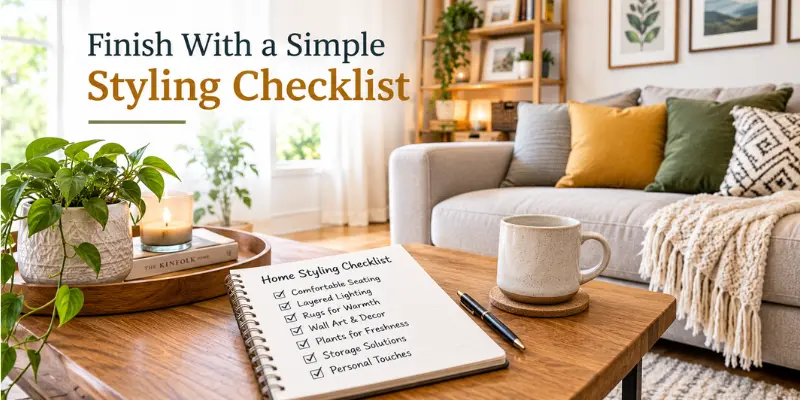
Once the main furniture, colors, and lighting are in place, take a final look at the room from the entrance and from the main seating positions. This helps you identify areas that feel crowded, empty, unbalanced, or poorly lit.
Check whether the seating arrangement supports conversation and everyday activities. Make sure pathways remain clear, the rug connects the furniture visually, and the coffee table is accessible. Confirm that curtains open properly and that lamps provide enough light for their intended purpose.
Review the balance of colors and textures. If everything looks too similar, introduce a contrasting cushion, artwork, or natural material. If the room feels too busy, remove a few accessories rather than adding more.
Keep personal items that make the space meaningful, but arrange them thoughtfully. A small collection of favorite books or photographs can provide more character than a shelf filled with unrelated decorations.
Finally, live with the arrangement before making additional purchases. You may discover that moving a chair, changing a lamp position, or removing an unnecessary table solves the problem you noticed.
The most successful living room decor reflects the people who use the room. It should feel comfortable, functional, and visually cohesive without requiring constant maintenance or a large budget.
Frequently Asked Questions About Living Room Decor
How can I decorate my living room without spending much money?
Start by rearranging existing furniture, decluttering surfaces, and cleaning items you already own. Then consider affordable updates such as cushion covers, throws, framed prints, plants, or a new lampshade. A consistent color palette can make these small changes feel coordinated.
What colors make a living room look elegant?
Warm white, beige, taupe, soft gray, muted green, and navy can all create an elegant appearance when used appropriately. The best combination depends on natural light, flooring, furniture, and personal preference. Test paint samples before committing to a full room.
How do I make a small living room look bigger?
Choose appropriately scaled furniture, maintain clear pathways, use vertical storage, and avoid unnecessary clutter. Mirrors and light-colored surfaces can help create a greater sense of openness, while a correctly sized rug can visually connect the seating arrangement.
What are the most important living room decor items?
The essentials usually include comfortable seating, suitable lighting, a practical table, window treatments where needed, and a rug or other element that helps define the space. Artwork, plants, cushions, and decorative accessories can be added according to your preferences and budget.
How many cushions should I put on my sofa?
There is no fixed number. Choose enough cushions to create comfort and visual interest without taking up too much seating space. A smaller sofa may need only a few, while a larger sectional can accommodate more.
How can I make my living room feel cozy?
Layer different light sources, introduce soft textiles, use comfortable seating, and add warm colors or natural materials. Personal objects, plants, and a well-arranged rug can also make the room feel more inviting.
Should all my living room furniture match?
No. Furniture should coordinate rather than match perfectly. Repeating colors, materials, or shapes can connect pieces from different collections and create a more personal interior.
Conclusion
Creating attractive living room decor begins with understanding how you use the space. A clear color palette, comfortable furniture, thoughtful lighting, suitable rugs, and meaningful accessories can transform an ordinary room into a welcoming part of your home.
Start with the layout and essential furnishings, then introduce decorative details that support your chosen style. Make measurements before purchasing, prioritize durability where necessary, and avoid spending money on items that do not improve comfort or functionality.
Whether you prefer a minimalist apartment, a cozy family room, or a contemporary entertaining space, the best design is one that feels natural to you. With a practical plan and a few well-chosen changes, you can create a beautiful living room that suits your lifestyle without exceeding your budget.



- Be Respectful
- Stay Relevant
- Stay Positive
- True Feedback
- Encourage Discussion
- Avoid Spamming
- No Fake News
- Don't Copy-Paste
- No Personal Attacks
- Be Respectful
- Stay Relevant
- Stay Positive
- True Feedback
- Encourage Discussion
- Avoid Spamming
- No Fake News
- Don't Copy-Paste
- No Personal Attacks
