Home Decor: 25 Practical Ideas to Make Your Home Beautiful
Published: 30 Sep 2026
Your home does not need expensive furniture, a complete renovation, or a professional designer to look beautiful. The right home decor choices can make an ordinary room feel more comfortable, organized, welcoming, and personal. Small changes such as improving lighting, rearranging furniture, adding artwork, introducing plants, changing textiles, or creating a better color balance can sometimes make a bigger visual difference than a major renovation.
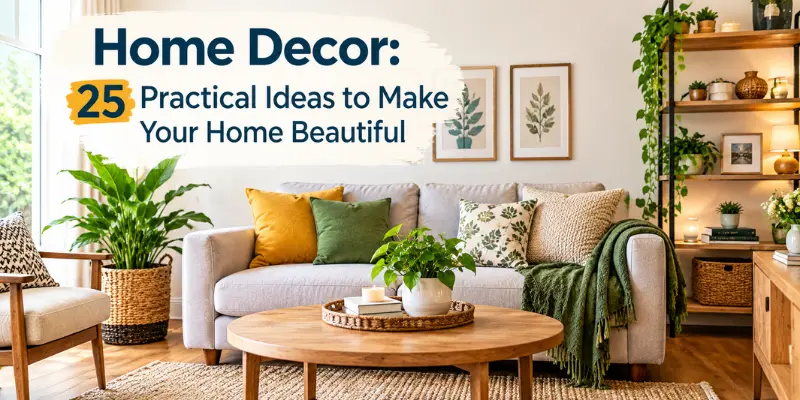
Good home decor is also about more than making a room attractive. A well-decorated space should support the way you actually live. A family living room needs to be comfortable and practical, a bedroom should feel relaxing, a kitchen should remain functional, and an entryway should make the home feel welcoming from the moment someone walks through the door.
The best approach is therefore to combine appearance with function. Before buying new decorative pieces, consider the room’s size, natural light, existing furniture, color palette, storage needs, and daily use. This makes it easier to create a home that feels coordinated instead of simply filled with decorative objects.
What Is Home Decor?
Home decor refers to the decorative and visual elements used to improve the appearance, atmosphere, and character of a living space. It can include furniture, rugs, curtains, cushions, wall art, mirrors, lighting, plants, decorative objects, shelves, vases, clocks, and other accessories.
Unlike structural remodeling, home decor generally focuses on how a space looks and feels without requiring major construction. Painting a wall, replacing curtains, adding artwork, changing cushions, introducing plants, or rearranging furniture can all transform a room without changing its basic structure.
If you want to understand the basic meaning and different categories of decor in more detail, read this helpful guide to what is decor. It provides useful background on decor, its types, styles, and applications.
Home decor can also reflect personal taste. One homeowner may prefer clean modern interiors with neutral colors, while another may enjoy traditional furniture, bold patterns, natural materials, or a mixture of vintage and contemporary pieces. There is no single decorating style that works for every home.
The most successful interiors usually have one thing in common: the individual elements feel connected. Colors relate to one another, furniture fits the scale of the room, lighting supports the atmosphere, and decorative accessories add personality without creating unnecessary clutter.
Start With a Decorating Plan
Before purchasing anything, decide what you want to improve. Decorating without a plan often results in buying individual items that look attractive in a store but do not work well together at home.
Start by looking at the room as a whole. Notice the existing floor, wall color, furniture, windows, doors, lighting, and architectural features. Decide which elements you want to keep and which ones need to change.
It is also useful to establish a simple purpose for the room. A living room might need to become more comfortable for family gatherings. A bedroom may need a calmer atmosphere. A dining area may need better lighting and more visual warmth. Once you know the purpose, choosing decorative elements becomes much easier.
Your budget should also be part of the plan. You do not need to purchase everything at once. In fact, decorating gradually can help you make better decisions because you have time to see how each new element affects the room.
Choose a Color Palette Before Buying Accessories
Color is one of the easiest ways to create visual consistency. Instead of selecting every decorative item independently, choose a basic palette first.
A simple approach is to use one dominant color, one secondary color, and one or two accent colors. Neutral walls can provide a flexible background, while cushions, artwork, rugs, curtains, or decorative objects can introduce stronger colors.
Warm colors such as terracotta, beige, cream, tan, and muted brown can create a comfortable and welcoming atmosphere. Cooler colors such as blue, soft green, gray, and muted charcoal can create a calmer or more contemporary appearance.
You do not have to make every item the same color. In fact, excessive matching can make a room look flat. Instead, repeat related shades in different places. For example, a muted green in artwork can be repeated subtly through cushions or plants.
Pay attention to undertones as well. A warm beige wall may work better with warm wood and cream textiles than with strongly blue-gray accessories. Similarly, cool gray interiors may look more cohesive when the decorative colors have compatible undertones.
Improve the Room With Better Lighting
Lighting is one of the most important parts of home decor because it affects both function and atmosphere. A room with beautiful furniture can still feel uninviting if it relies on one harsh overhead light.
Try to create layers of lighting. General lighting provides overall illumination, while task lighting helps with specific activities such as reading, cooking, working, or studying. Accent lighting can highlight artwork, shelving, architectural details, or decorative objects.
Table lamps and floor lamps can also make empty corners more useful. A small lamp beside a sofa can create a comfortable reading area, while a decorative lamp on a console can add visual interest to an entryway.
Natural light should also influence your choices. Before selecting curtains, mirrors, or darker decorative colors, observe how sunlight moves through the room during the day. A bright room can support deeper accents, while a darker room may benefit from lighter surfaces and carefully positioned lighting.
Use Wall Art to Create a Focal Point
Empty walls can make an otherwise attractive room feel unfinished. Wall art provides an easy way to introduce personality, color, and visual focus.
You do not need to cover every wall. One carefully selected piece can sometimes have more impact than several unrelated decorations. Large artwork can work well above a sofa, bed, dining table, or console, provided its scale is appropriate for the furniture beneath it.
For more inspiration, see our detailed guide to wall decor ideas, which covers artwork, mirrors, shelves, gallery walls, wall panels, DIY ideas, and different approaches for individual rooms.
Gallery walls offer another option. Several photographs, prints, paintings, or illustrations can be arranged together to create a larger visual feature. Keep some relationship between the pieces through color, frame style, subject matter, or spacing.
Mirrors can also serve a decorative purpose. A large mirror can reflect light and provide depth, while a smaller decorative mirror can become an accent feature. The important point is to place mirrors intentionally rather than simply adding them because an empty wall is available.
Add Texture Instead of Relying Only on Color
A room can have a good color palette and still feel visually flat. Texture helps solve that problem.
Consider combining smooth surfaces with softer or more tactile materials. A sofa can be paired with textured cushions and a throw. A simple wooden table can be softened with a fabric runner or decorative centerpiece. A plain wall can gain character through artwork, shelves, woven pieces, or other tactile elements.
Textiles are especially useful because they can change the atmosphere without requiring permanent alterations. Curtains, cushions, rugs, throws, and upholstery can introduce softness and visual depth.
When selecting these materials, consider how the room is actually used. Frequently handled furniture needs fabrics that can tolerate regular use and cleaning.
Choose Furniture According to Room Size
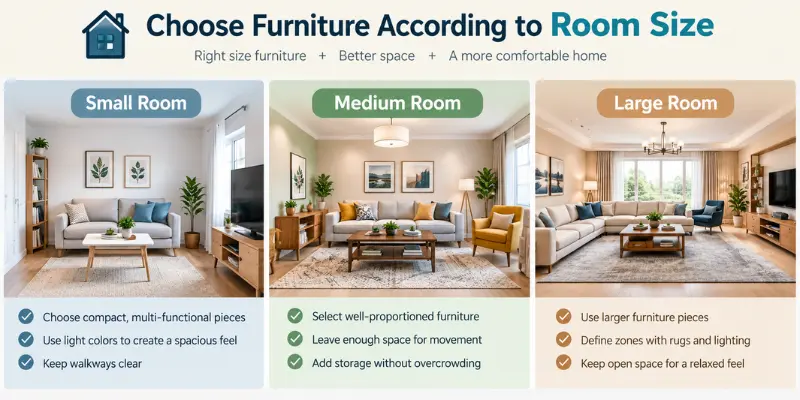
Furniture should fit the scale of the room. Oversized furniture can make a small space feel crowded, while furniture that is too small can make a large room feel disconnected.
Measure the available space before purchasing major pieces. Consider not only the furniture dimensions but also walking paths, doors, windows, and access to storage.
In smaller rooms, furniture with visible legs, lighter visual profiles, or multiple functions can help maintain a sense of openness. Storage ottomans, nesting tables, benches with storage, and wall-mounted shelves can provide useful functions without taking up excessive floor space.
Larger rooms provide more flexibility, but they still benefit from thoughtful arrangement. Instead of pushing every piece against the walls, consider creating defined conversation areas. A sofa and two chairs can form one zone, while a reading chair and floor lamp can create another.
Decorate the Living Room Around Conversation and Comfort
The living room is often the most visible shared space in a home, so its decor needs to balance appearance and comfort.
Start with the seating arrangement. People should be able to talk comfortably without having to turn awkwardly toward one another. A rug can help visually connect seating pieces and define the central area.
A coffee table can provide both function and decoration. Keep enough space around it for comfortable movement, and avoid covering the surface with too many objects.
Add personality through artwork, cushions, books, plants, lamps, and carefully selected decorative pieces. Rather than filling every surface, choose a few items that have different heights and textures.
Keep Up With Trends Without Losing Your Personal Style
Home decor trends can provide useful inspiration, but you do not need to redesign your entire home whenever a new style becomes popular.
Current decorating discussions often focus on natural materials, warm minimalism, comfortable furniture, functional spaces, contrasting colors, layered lighting, and personalized interiors. Our detailed guide on what home decor is trending explores these trends in greater detail, including furniture, lighting, wall ideas, materials, sustainability, and room planning.
The better approach is to select trends that suit your home and lifestyle. For example, you can introduce a trending color through cushions or artwork rather than repainting every room. Similarly, a current lighting style can be introduced through one pendant or floor lamp rather than replacing the entire lighting system.
This makes your decor easier to update while maintaining a consistent overall style.
Create a Calmer Bedroom
Bedrooms generally benefit from a softer approach to decoration. The goal is to create a space that feels comfortable rather than visually busy.
Start with the bed because it usually becomes the largest visual element. Layer bedding through sheets, pillows, a duvet or comforter, and a throw. Keep the colors connected to the rest of the room rather than introducing too many unrelated shades.
Bedside lighting can provide both function and atmosphere. Matching lamps are not required, although they can create symmetry. Different lamps can also work when their scale and visual weight are balanced.
Keep decorative objects limited on bedside tables. A lamp, book, small plant, or simple decorative piece may be enough. Reducing unnecessary clutter can make the room feel more peaceful.
Make the Kitchen Decorative Without Losing Function
Kitchens need to remain practical, so home decor should never interfere with food preparation, storage, cleaning, or safe movement.
Open shelves can provide opportunities to display attractive dishes, glassware, cookbooks, plants, or decorative objects. However, avoid filling shelves with too many items. A mixture of useful and decorative pieces usually feels more natural.
Lighting under cabinets, decorative pendants, artwork in suitable locations, and carefully selected textiles can add personality without changing the entire kitchen.
Make the Entryway Welcoming
The entryway creates the first impression of the interior. It does not need to be large to make an impact.
A mirror, console table, wall art, small rug, plant, or decorative bowl can create a practical and attractive entrance. If space is limited, use vertical storage or wall hooks rather than adding bulky furniture.
Keep everyday items organized. Keys, shoes, bags, mail, and other frequently used objects can quickly make an entryway look untidy. Good organization is therefore part of good home decor.
Bring Nature Indoors With Plants
Plants can add color, texture, and life to a room. They can also occupy awkward corners that are difficult to decorate with furniture.
Choose plants according to available light and the amount of maintenance you are prepared to provide. A plant that requires strong sunlight may not perform well in a dark corner, while a low-maintenance variety may be more appropriate for someone who travels frequently.
Plant pots are also part of the decorative scheme. Ceramic, woven, concrete-look, metal, and wooden finishes can create very different visual effects.
Use Shelves to Combine Storage and Decoration
Shelving can solve two problems at once: storage and visual presentation.
Floating shelves can display books, photographs, small plants, vases, artwork, and meaningful objects. They are particularly useful in smaller homes where floor space is limited.
When styling shelves, avoid placing objects at exactly the same height. Combine tall, medium, and low items to create visual movement. Leave some empty space as well. Completely filled shelves can look cluttered even when every individual item is attractive.
Decorate With Mirrors Strategically
Mirrors can be both functional and decorative. Their reflective surfaces can help distribute light and make certain areas feel more open.
Instead of automatically placing a mirror opposite another mirror, consider what it will reflect. A mirror facing an attractive window, artwork, plant, or architectural feature can make that feature more noticeable.
Large mirrors can become focal points, while groups of smaller mirrors can create a decorative wall arrangement.
Use Rugs to Define Areas
Rugs add softness and help visually organize a room. They can define a seating area, add color, introduce texture, and create a stronger connection between furniture pieces.
Size is important. A rug that is too small may look disconnected from the furniture. In a living room, the rug should generally relate clearly to the seating arrangement rather than appearing like a small island in the middle of the floor.
Pattern also needs consideration. If your furniture and artwork already contain strong patterns, a simpler rug may provide balance. If the rest of the room is relatively neutral, a patterned rug can become a focal point.
Make Small Spaces Feel More Open
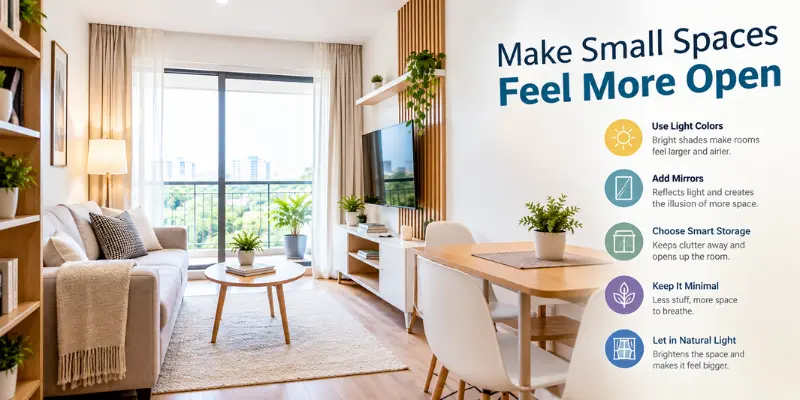
Small rooms require careful selection because every object occupies valuable visual and physical space.
Use furniture that fits the room instead of choosing pieces based only on appearance. Keep walking paths clear and avoid unnecessary decorative objects on the floor.
Use vertical storage, appropriately sized mirrors, light-colored surfaces, and furniture with a lighter visual profile where appropriate. These choices can help maintain an open appearance without removing personality.
Create a Beautiful Home on a Budget
Good home decor does not require replacing everything. Start with the changes that provide the greatest visual impact.
Rearranging furniture costs nothing but can completely change how a room functions. Decluttering can also make an immediate difference. After that, consider relatively affordable changes such as cushion covers, curtains, artwork, lamps, plants, rugs, or hardware.
Repurposing existing items is another useful strategy. A decorative tray from one room may work better on a coffee table. A framed picture may look more effective in another location. A small table may become a bedside table or plant stand.
Consider Sustainable Decor Choices
Decorating can also be an opportunity to make more thoughtful purchasing decisions.
Instead of buying large quantities of inexpensive decorative objects, consider selecting fewer pieces that are useful, durable, and likely to remain appealing for longer. Reusing existing furniture, buying secondhand pieces, repairing damaged items, and choosing materials responsibly can all reduce unnecessary replacement.
For wooden furniture and home accessories, certification can be one factor to consider when comparing products. The Forest Stewardship Council’s furniture and homeware resources provide information about FSC-certified furniture, homeware, and DIY-related products.
Think About Indoor Air Quality When Decorating
Decorating can involve paints, adhesives, finishes, furnishings, and other household products. Some of these products can release volatile organic compounds, commonly known as VOCs.
The U.S. Environmental Protection Agency explains that VOCs are emitted by a wide range of household products and materials and can contribute to indoor air pollution.
For this reason, follow product instructions carefully and provide appropriate ventilation when painting, installing products, or using materials that may release fumes. Allow newly finished spaces to air out according to the manufacturer’s recommendations.
Mix Old and New Pieces
A home can feel more personal when everything does not look as though it came from the same collection.
Try combining contemporary furniture with an older wooden table, vintage artwork, handmade ceramics, family photographs, or other meaningful objects. The mixture can create depth and character.
The key is to find a visual connection. Different pieces can still share a color, material, shape, texture, or proportion.
Personal objects are particularly valuable because they give the room a story. A photograph from a memorable trip or a handmade object can contribute more personality than a generic decorative accessory.
Avoid Decorating Every Surface
One of the most common decorating mistakes is assuming that every empty surface needs an object.
Empty space is part of the design. It gives the eye somewhere to rest and allows important decorative elements to stand out.
Instead of placing five objects on a console, try three objects with different heights. Instead of filling every wall, choose one or two walls for artwork and leave others relatively quiet.
This approach can make a room feel more intentional and can also make cleaning easier.
Avoid Following Trends Too Closely
Trends can provide inspiration, but your entire home does not need to follow the latest decorating style.
Large furniture pieces, flooring, cabinetry, and other expensive elements are difficult to replace frequently. It can therefore be more practical to keep these components relatively adaptable and introduce trends through smaller accessories.
Cushion covers, artwork, decorative objects, lamps, and smaller textiles can be changed more easily than flooring or built-in cabinetry.
Think About Maintenance Before Buying Decor
A beautiful room still needs to be livable. Before purchasing a decorative item, consider how it will be cleaned and maintained.
Light-colored upholstery may require more frequent cleaning in a busy household. Open shelves may collect dust faster than closed storage. Large rugs may need regular vacuuming and occasional deep cleaning.
Maintenance should not eliminate beautiful choices, but it should influence where and how you use them.
Common Home Decor Mistakes to Avoid
Buying everything at once is one common mistake. Decorating gradually allows you to understand what the room actually needs.
Another mistake is ignoring scale. A tiny artwork above a large sofa may look lost, while an oversized piece in a narrow hallway may dominate the space.
Using too many colors can also create visual confusion. A controlled palette generally makes it easier to combine furniture and accessories.
Poor lighting is another frequent problem. Even a well-designed room can feel flat when every activity depends on one overhead fixture.
Finally, avoid copying an inspirational photograph exactly. A picture may look perfect because of its architecture, natural light, room dimensions, photography, and carefully staged accessories. Use it as inspiration rather than as a template.
How to Make Your Home Decor Feel Cohesive
A cohesive home does not mean every room has to look identical. Instead, certain elements can repeat throughout the house.
You might use similar wood tones, complementary wall colors, related metals, or recurring accent colors. For example, black hardware in the kitchen could be echoed by black picture frames in the living room and a black lamp in the bedroom.
Materials can also connect rooms. Natural wood, woven textures, ceramics, plants, and soft textiles can appear in different forms throughout the home.
This creates continuity while still allowing each room to have its own personality.
When Should You Update Your Home Decor?

There is no fixed schedule for redecorating. A room may need an update when it no longer works for your lifestyle, when furniture becomes uncomfortable, when the layout creates problems, or when you simply want a fresh atmosphere.
Small seasonal updates can be enough. Changing textiles, artwork, plants, or accessories can give a room a different feel without requiring a complete makeover.
Larger changes should be planned more carefully. If flooring, cabinetry, lighting, or paint is being replaced, consider the complete room rather than choosing each element separately.
Final Thoughts
The best home decor is not necessarily the most expensive or the most fashionable. It is the decoration that makes your home comfortable, functional, attractive, and personal.
Start with the room’s purpose, establish a manageable color palette, and choose furniture that fits the available space. Add layers through lighting, artwork, rugs, textiles, plants, mirrors, shelves, and meaningful accessories. At the same time, leave enough empty space to prevent the room from feeling crowded.
You can also improve your home gradually. Rearrange what you already own before buying new pieces, invest in items that solve genuine problems, and choose decorative elements that can adapt as your style changes.
For readers who want to explore the subject further, our guides on what is decor, wall decor ideas, and what home decor is trending provide more focused information on specific areas of decorating.
Whether you prefer modern minimalism, traditional warmth, natural textures, eclectic interiors, or a combination of styles, thoughtful home decor can turn a house into a space that genuinely feels like yours. The strongest results usually come from balance: beauty with function, personality with simplicity, and decoration with enough open space to let the room breathe.
Frequently Asked Questions About Home Decor
What is the easiest way to improve home decor?
The easiest starting point is usually to declutter, rearrange furniture, improve lighting, and introduce a few coordinated accessories. These changes can create a noticeable difference without requiring major renovation.
How can I decorate my home on a small budget?
Start by using what you already own. Rearrange furniture, move artwork between rooms, repurpose decorative pieces, and remove unnecessary clutter. After that, prioritize affordable high-impact changes such as lighting, cushions, curtains, plants, rugs, or wall art.
How many colors should I use in a room?
There is no mandatory number, but a simple palette with a dominant color, a secondary color, and one or two accents is often easier to coordinate. The colors do not have to match exactly; they should simply work well together.
How can I make a small room look better?
Choose furniture that fits the room, keep pathways clear, use vertical storage, make good use of natural light, and avoid unnecessary decorative clutter. Mirrors and lighter visual elements can also help create a more open feeling.
Should all rooms have the same decor style?
No. Each room can have its own personality. However, repeating certain colors, materials, finishes, or design details can make the entire home feel connected.
Is expensive furniture necessary for good home decor?
No. Good proportions, thoughtful placement, appropriate lighting, coordinated colors, and personal details can have a greater visual impact than price alone. Quality and suitability are generally more important than simply choosing the most expensive option.






- Be Respectful
- Stay Relevant
- Stay Positive
- True Feedback
- Encourage Discussion
- Avoid Spamming
- No Fake News
- Don't Copy-Paste
- No Personal Attacks
- Be Respectful
- Stay Relevant
- Stay Positive
- True Feedback
- Encourage Discussion
- Avoid Spamming
- No Fake News
- Don't Copy-Paste
- No Personal Attacks
