Panels for Walls: Types, Materials, Designs, and Installation Guide
Published: 06 Nov 2026
Panels for walls are a practical way to transform plain interior surfaces, introduce texture, improve visual appeal, and create a distinctive atmosphere in residential and commercial spaces. From traditional wood paneling and elegant wainscoting to modern fluted designs, waterproof PVC products, and decorative 3D surfaces, today’s wall panels offer many possibilities for homeowners, interior designers, contractors, and property renovators.
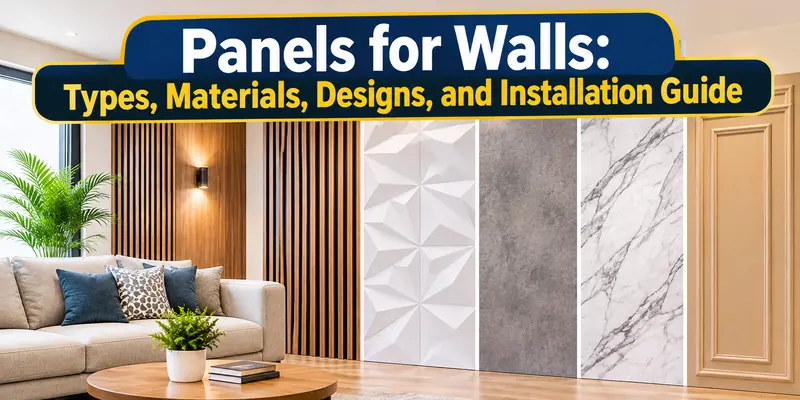
Unlike ordinary paint, which mainly changes a wall’s color, wall paneling can add depth, patterns, visual structure, and sometimes additional functional benefits. Depending on the material and installation system, panels can also help conceal minor surface imperfections, protect high-traffic wall areas, or provide a convenient decorative finish without completely rebuilding an interior wall.
The growing availability of panels for walls in different materials, colors, textures, thicknesses, and sizes has made them suitable for many interior styles. Homeowners in the United States can find options for living rooms, bedrooms, kitchens, bathrooms, basements, hallways, home offices, and commercial interiors. Similar choices are available in India and other international markets, although product availability, building practices, climate conditions, and local installation costs can vary.
However, choosing the right wall panel is not simply a matter of selecting an attractive pattern. The material must suit the room’s moisture levels, temperature, cleaning requirements, installation surface, budget, and intended use. A decorative MDF panel that works beautifully in a dry living room may not be appropriate for a damp basement or an area exposed to direct water. Likewise, a natural wood panel may provide excellent visual warmth but require more maintenance than a synthetic alternative.
This guide explains the main types of panels for walls, their materials, popular designs, advantages, disadvantages, room-by-room applications, buying considerations, approximate cost factors, preparation requirements, installation methods, and maintenance practices. It will help you compare available options and make a more informed decision before starting a wall renovation project.
What Are Panels for Walls?
Panels for walls are premanufactured boards, sheets, planks, or decorative sections attached to an interior or exterior wall surface. They may be produced from natural wood, engineered wood, medium-density fiberboard, plywood, plastic, fiberglass, metal, acrylic, composite materials, or other suitable products.
Some wall panels are primarily decorative, while others are designed to provide additional protection, durability, or performance characteristics. Their appearance can range from smooth and minimalist surfaces to deeply textured, carved, geometric, or three-dimensional patterns.
Wall panels are available in different formats. Large sheets can cover broad areas with fewer visible joints, while narrow planks create a repeated linear pattern. Individual decorative sections may be installed as framed designs, raised panels, or feature-wall arrangements.
The term wall paneling can also describe a complete decorative treatment rather than a particular product. For example, wainscoting refers to paneling applied to the lower portion of an interior wall, while board-and-batten is a style created by arranging boards and narrow strips over their joints.
It is useful to understand this distinction before shopping. A product’s material describes what it is made from, whereas its design describes the visual arrangement or profile. A homeowner may choose MDF as the material and a fluted pattern as the design, or select natural wood in a shiplap arrangement.
If you are exploring broader decorating options, you may also read our guide to wall decor ideas, which covers different ways to improve the appearance of interior walls using artwork, mirrors, shelves, and other decorative features.
How Wall Panels Differ From Paint and Wallpaper
Paint creates a new color or finish on an existing surface. Wallpaper adds a printed, patterned, or textured covering, generally without creating the same physical depth as a panel. Wall panels, by comparison, are usually thicker and provide a more noticeable change in surface structure.
These options are not necessarily competitors. A room may combine painted walls with a paneled accent wall, or use wallpaper above a wainscoting treatment. The right combination depends on the room’s style, wall condition, maintenance requirements, and budget.
Where Wall Panels Are Commonly Used
Panels can be installed on a single feature wall, around an entire room, below a chair rail, behind a bed, around a reception area, or in selected architectural sections. Some products are intended for dry interior spaces, while others are manufactured for more demanding environments.
Before selecting a product, check whether the manufacturer approves it for the intended location. Interior decorative paneling should not automatically be treated as waterproof, fire-rated, structural, or suitable for outdoor exposure.
Main Types of Panels for Walls
The market includes many types of wall panels, each offering different appearance, performance, installation requirements, and maintenance needs. Understanding these categories makes it easier to narrow down suitable products.
1. Solid Wood Wall Panels
Solid wood panels are made from natural timber and are valued for their grain patterns, warmth, and authentic appearance. Common choices include oak, pine, walnut, cedar, maple, and other species, depending on local availability and the desired finish.
Wood panels can be installed as individual planks, tongue-and-groove boards, decorative sections, or custom architectural panels. Their natural appearance works well in traditional, rustic, farmhouse, transitional, and contemporary interiors.
One of the main advantages of solid wood is its distinctive grain. Even panels made from the same species can have slightly different patterns, making each installation visually individual. Wood can also be stained, painted, sanded, or refinished when the product and finish allow it.
However, natural wood responds to changes in temperature and humidity. It can expand, contract, cup, or warp if it is installed incorrectly or exposed to unsuitable conditions. Proper acclimation, suitable fastening, expansion allowances, and appropriate finishing are important.
Solid wood is often more expensive than basic engineered alternatives. The final price depends on the wood species, grade, thickness, profile, finish, manufacturing quality, and installation complexity.
For homeowners who want a natural appearance and are prepared to maintain the surface, solid wood remains an attractive choice.
2. MDF Wall Panels
Medium-density fiberboard, commonly known as MDF, is an engineered wood product manufactured from wood fibers combined with resin and formed into boards under heat and pressure.
MDF is widely used for interior decorative paneling because it offers a smooth and consistent surface. It can be machined into grooves, routed patterns, raised sections, fluted profiles, and other decorative shapes.
Painted MDF panels are particularly popular in modern and traditional interiors. They can be used for board-and-batten walls, geometric arrangements, decorative wall frames, and wainscoting.
Compared with many natural wood products, MDF provides a more uniform surface and may be easier to achieve a consistent painted finish. It is also available in different thicknesses and board sizes.
Its main limitation is moisture sensitivity. Standard MDF can swell, soften, or lose its integrity when exposed to excessive moisture. Moisture-resistant MDF products are available, but their suitability still depends on the manufacturer’s specifications and the actual conditions in the room.
MDF should not be assumed to be waterproof simply because it has been painted. Edges, joints, cutouts, and unsealed surfaces can remain vulnerable.
When purchasing MDF panels, ask about the product’s intended application, moisture classification, finish compatibility, and emissions certification. In the United States, composite wood products are subject to federal formaldehyde requirements. The U.S. Environmental Protection Agency’s formaldehyde standards provide useful information about regulated composite wood products and emissions.
3. Plywood Wall Panels
Plywood is manufactured by bonding thin layers of wood veneer together, usually with the grain direction of adjacent layers arranged at different angles. This construction helps provide dimensional stability and strength compared with a single thin piece of wood.
Plywood wall panels are available in different grades, thicknesses, veneer types, and surface finishes. Some are designed for construction purposes, while others have attractive faces intended for visible interior applications.
Decorative plywood can be left with a natural finish, stained, painted, or combined with other materials. It is often used in modern, Scandinavian-inspired, industrial, and minimalist interiors.
One benefit is its versatility. Plywood can be cut into large sheets, narrow strips, or custom shapes. Depending on its grade and construction, it may provide a suitable surface for a variety of interior paneling projects.
However, not every plywood product is intended for decorative exposure. Lower-grade sheets may have visible patches, voids, rough edges, or inconsistent veneers. Some products also require sanding, edge treatment, sealing, or additional finishing.
Moisture resistance varies by product and adhesive system. A plywood panel described as suitable for certain construction applications should not automatically be considered waterproof.
Choose a grade and specification appropriate for the intended interior environment, and check the manufacturer’s instructions before installation.
4. PVC Wall Panels
Polyvinyl chloride, commonly called PVC, is a plastic material used in a wide range of building and interior products. PVC wall panels are available in smooth, printed, textured, marble-effect, wood-effect, and decorative finishes.
They are popular in some bathrooms, utility areas, kitchens, commercial spaces, and other locations where easy cleaning is important. Many products are lightweight and designed with interlocking edges or other installation systems.
PVC panels can be easier to wipe clean than unfinished natural wood. They are also not susceptible to wood rot in the same way as timber, although moisture can still enter behind an incorrectly installed panel system.
Their limitations include heat sensitivity, potential surface damage, and differences in quality between manufacturers. Some lower-quality products may discolor, become brittle, or look artificial. PVC panels should not be installed near high-temperature sources unless the product is specifically approved for that application.
It is also important to distinguish water-resistant surfaces from a fully waterproof wall assembly. Joints, corners, penetrations, edges, and the substrate behind the panels require suitable detailing.
For kitchens and bathrooms, follow the manufacturer’s restrictions regarding direct water exposure, ventilation, heat, and installation over existing surfaces.
5. Fiberglass Reinforced Plastic Panels
Fiberglass reinforced plastic, often abbreviated as FRP, combines plastic resin with reinforcing glass fibers. FRP wall panels are commonly used in commercial and service environments where durability and cleanability are important.
They are found in some food-service areas, utility rooms, healthcare-related spaces, workshops, and other locations where wall surfaces may require frequent cleaning.
FRP panels generally have a practical rather than decorative appearance, although finishes and textures vary. They are often selected for their resistance to moisture and their ability to withstand routine cleaning when installed according to the manufacturer’s requirements.
The installation system matters. Correct adhesives, compatible substrates, joint treatments, edge trims, and surface preparation are essential for a durable result.
FRP is not automatically suitable for every kitchen or bathroom. Product specifications should be checked for chemical exposure, temperature limits, fire performance, and cleaning products.
For residential decorative projects, FRP may be less visually appealing than wood, MDF, or 3D panels. However, it can be a practical option where easy maintenance and durability are more important than a luxury finish.
6. 3D Wall Panels
Three-dimensional wall panels create depth through raised patterns, geometric forms, waves, curves, lines, or sculptural shapes. They are commonly used to create accent walls in living rooms, bedrooms, offices, reception areas, and entertainment spaces.
Depending on the product, 3D panels may be made from MDF, PVC, gypsum, plant fibers, composites, or other materials. Their appearance and performance therefore vary significantly.
A 3D panel can create a strong focal point without requiring multiple decorative accessories. It may also interact with lighting to produce shadows and highlights that change throughout the day.
However, heavily textured panels can collect dust in grooves and recessed areas. Their cleaning requirements should be considered before installation, especially in homes with pets or in areas where cooking residue may accumulate.
The pattern should also be selected according to the wall’s size. Large geometric designs may look impressive on a broad surface but can feel overwhelming in a small room. Smaller patterns may provide a more subtle decorative effect.
7. Acrylic Wall Panels
Acrylic wall panels are manufactured from acrylic plastic and are available in glossy, matte, translucent, colored, printed, and decorative finishes.
Some products are designed to imitate stone, glass, or other high-end surfaces. Their smooth appearance can suit modern interiors, decorative feature walls, display areas, and selected commercial applications.
Acrylic is relatively lightweight compared with some traditional materials, but it can scratch. Cleaning products and installation methods must be compatible with the manufacturer’s recommendations.
Not every acrylic panel is suitable for use behind a stove, in a shower, or in a high-temperature location. Check the product’s heat resistance, moisture suitability, and approved applications before purchasing.
8. Metal Wall Panels
Metal panels may be manufactured from aluminum, steel, or other metals. They can have smooth, brushed, perforated, embossed, ribbed, or patterned finishes.
Metal wall paneling is commonly associated with industrial, contemporary, commercial, and architectural interiors. It can provide a distinctive appearance in restaurants, offices, retail spaces, workshops, and selected residential feature walls.
Metal products can be durable, but their performance depends on the metal type, coating, thickness, environment, and installation system. Some surfaces may show fingerprints, scratches, dents, or corrosion if the finish is unsuitable for the conditions.
Metal panels can also reflect sound and light differently from softer materials. Consider the acoustic character of the room, particularly in large spaces with hard floors and limited furnishings.
9. Upholstered Wall Panels
Upholstered panels combine a rigid backing with foam, padding, fabric, leather, or a similar covering. They are often used behind beds, in reading areas, private offices, hospitality interiors, and selected living spaces.
Their main appeal is softness. They introduce a textile surface that contrasts with hard walls and can create a comfortable, decorative appearance.
Depending on construction, upholstered panels may also contribute to sound absorption. However, they should not be treated as a substitute for a tested acoustic system unless the manufacturer provides appropriate performance data.
Fabric panels require more attention to cleaning than many smooth surfaces. Dust, stains, odors, and wear can affect their appearance over time. Check whether the covering is removable, washable, stain-resistant, or suitable for the intended environment.
10. Composite and Decorative Laminate Panels
Composite wall panels are manufactured from combinations of materials, which may include wood fibers, resins, mineral components, plastics, decorative laminates, or other substances.
This broad category includes many products with different levels of durability, moisture resistance, surface quality, and cost.
Decorative laminate panels can imitate timber, stone, concrete, fabric, or other finishes. They are often selected when homeowners want a consistent visual appearance without using natural materials throughout the room.
The term composite does not describe one universal performance level. Two panels with similar appearances may have very different cores, surface coatings, fire characteristics, and moisture limitations.
Always review the product’s technical data sheet rather than choosing only by its appearance.
Popular Wall Panel Designs and Styles
The material determines many of a panel’s physical characteristics, but the design influences how it changes the appearance of a room. The following styles are widely used in residential and commercial interiors.
1. Shiplap Wall Panels
Shiplap consists of horizontal boards with overlapping or rabbeted edges that create a distinctive linear appearance. It is associated with farmhouse, coastal, rustic, and transitional interiors.
White shiplap can make a room feel bright and relaxed, while natural wood finishes introduce warmth. Dark painted shiplap can create a more contemporary accent.
The spacing and profile influence the final appearance. Narrow boards create a more detailed pattern, while wider boards can produce a simpler visual effect.
2. Beadboard Wall Panels
Beadboard features narrow vertical boards or panels with a repeating groove or bead between sections. It is commonly used for wainscoting, hallways, bathrooms, kitchens, and traditional interiors.
The vertical lines can create a sense of height and provide a classic decorative finish. Beadboard is often painted white, cream, or another coordinated color, although natural finishes are also available.
Choose a product suitable for the room’s moisture conditions, particularly in bathrooms and kitchens.
3. Board-and-Batten Paneling
Board-and-batten is created by placing wide boards or flat panels on a wall and covering the joints with narrow vertical strips called battens. The result is a series of framed sections or vertical divisions.
This design is popular in farmhouse, modern traditional, and contemporary interiors. It can be applied to a full wall or used as a lower-wall treatment.
The spacing between battens should be planned carefully. Uneven spacing can make the finished wall look unbalanced, especially when the design includes windows, doors, or corners.
4. Raised Panel Wainscoting
Raised panel wainscoting features decorative panels with raised centers and surrounding frames. It is often associated with traditional, formal, and classic interiors.
It can be installed across the lower part of a wall, around a dining room, or throughout a hallway. The panel height, frame width, and molding profile influence the overall style.
5. Flat Panel Wainscoting
Flat panel wainscoting uses recessed or flat decorative sections rather than raised centers. Its clean appearance makes it suitable for both traditional and contemporary interiors.
It can be painted in the same color as the upper wall for a subtle effect or in a contrasting shade to create more visual definition.
6. Fluted Wall Panels
Fluted panels have repeated vertical grooves or rounded ridges. They are popular in modern interiors because they introduce texture while maintaining a relatively simple pattern.
They can be used behind televisions, beds, consoles, reception desks, or dining areas. Natural wood finishes provide warmth, while painted and synthetic finishes offer more color options.
Fluted panels can collect dust in their grooves, so consider cleaning requirements before installing them across a large wall.
7. Slatted Wall Panels
Slatted panels consist of narrow strips arranged with consistent gaps or backing between them. They are often used to create modern feature walls and can be made from wood, MDF, or composite materials.
Slatted designs can add rhythm and texture to a space. Some products are designed with acoustic backing, but sound performance depends on the complete system, not simply the visible slats.
8. Geometric Wall Panels
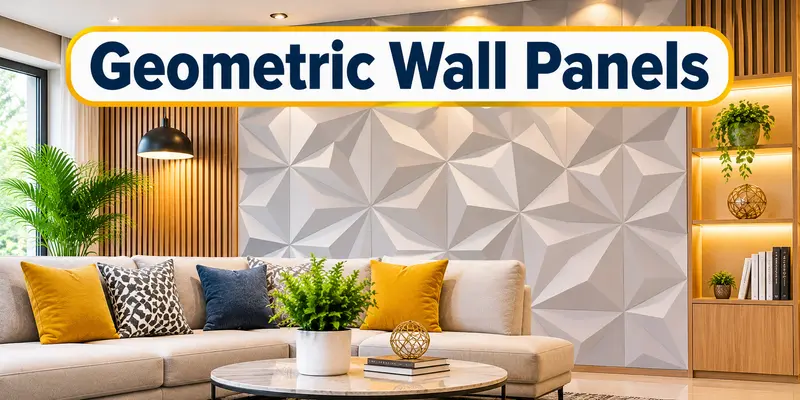
Geometric designs use shapes such as rectangles, squares, diamonds, triangles, or irregular patterns to create a decorative surface.
They can be produced from MDF, wood, gypsum, or other materials. A geometric feature wall can suit modern bedrooms, offices, entertainment spaces, and contemporary living rooms.
Because these patterns can become visually dominant, use them selectively and coordinate them with simpler surrounding finishes.
9. Stone-Look and Marble-Look Panels
Stone-look panels imitate natural materials such as marble, slate, granite, or limestone. Depending on construction, they may be made from PVC, acrylic, laminate, composite materials, or other products.
They can provide a stone-inspired appearance without using heavy natural slabs. However, printed patterns and surface textures vary in realism and quality.
Check panel joints carefully. Repeating patterns or visible seams may affect the finished appearance.
10. Decorative 3D and Textured Panels
Decorative 3D panels include sculptural, wave-shaped, patterned, and relief surfaces. They can create a striking accent wall in a contemporary home or commercial interior.
Before purchasing, consider the pattern scale, lighting, cleaning requirements, and installation method. A sample is useful because the texture can look different in natural and artificial light.
Benefits of Installing Panels for Walls
Wall panels offer several benefits, although the actual results depend on the material, product quality, installation, and room conditions.
Improved Interior Appearance
One of the main reasons homeowners choose panels for walls is their decorative effect. A plain surface can become a focal point through color, texture, patterns, and architectural detail.
Panels can complement furniture, flooring, lighting, and other finishes. They also provide a way to introduce natural-looking materials or geometric patterns without redesigning an entire room.
More Surface Texture and Dimension
Paint and wallpaper generally provide a flatter finish, while many panels create physical depth. Fluted, raised, slatted, and 3D designs can introduce shadows and visual movement.
This is particularly useful when a room needs a focal point but does not have a strong architectural feature.
Protection in Selected High-Traffic Areas
Certain wall panels can help protect surfaces from everyday contact, scuffs, and minor impacts. For example, durable paneling may be useful in hallways, utility rooms, commercial spaces, or areas where furniture frequently touches the wall.
The level of protection depends on thickness, material, finish, and installation. Decorative panels should not be assumed to provide structural protection.
Ability to Cover Minor Surface Imperfections
Panels may conceal small cosmetic defects when installed over a suitable wall. However, they should not be used to hide serious cracks, active leaks, mold, dampness, or unstable plaster.
The underlying wall should be inspected and repaired before installation. Covering a moisture problem can make future damage more difficult to detect.
Design Flexibility
Wall panels are available in many materials, patterns, colors, and sizes. This makes it possible to create a subtle lower-wall treatment, a full-height feature wall, or a decorative arrangement around selected architectural areas.
Potentially Straightforward Installation
Some lightweight products are designed for adhesive installation, while others use nails, screws, clips, battens, or interlocking systems. A suitable product may be manageable as a DIY project for someone with the necessary skills and tools.
Complex layouts, heavy panels, electrical cutouts, uneven walls, and moisture-sensitive areas may require professional installation.
Options for Different Budgets
Basic paneling products can be relatively affordable, while premium timber, custom architectural panels, and elaborate finishes can cost considerably more.
The range of materials makes it possible to compare products according to appearance, maintenance, expected lifespan, and project budget.
Disadvantages and Limitations of Wall Panels
Wall paneling is not the best solution for every room or wall. Understanding its limitations can prevent unnecessary expenses.
Initial Material and Installation Costs
Some panels are inexpensive, but the total project can become costly after adding trims, adhesives, fasteners, surface preparation, tools, delivery, waste, and labor.
Custom designs and complicated layouts may require more installation time than a simple painted wall.
Moisture-Related Problems
Wood and standard MDF can be affected by moisture. Water can also enter behind poorly sealed panels and damage the substrate.
Even products marketed as water-resistant need correct installation. Pay attention to joints, corners, edges, plumbing penetrations, and ventilation.
Reduced Usable Wall Space
Panels add thickness to the existing surface. This may affect door frames, electrical outlets, switches, window trim, baseboards, and built-in furniture.
Measure these details before purchasing and confirm that the planned panel thickness will not create installation problems.
Cleaning Requirements
Textured and deeply grooved panels can collect dust. Fabric panels may need special cleaning, while glossy surfaces may show fingerprints and scratches.
Choose a finish that matches the amount of maintenance you are prepared to perform.
Potential Damage During Removal
Some panels are installed with strong adhesives or permanent fasteners. Removing them may damage paint, drywall, plaster, or the original wall finish.
If you expect to change the design later, consider the installation method and whether a removable or mechanically fixed system is available.
How to Choose the Best Panels for Walls
Selecting wall panels requires more than comparing colors and prices. The following considerations can help you choose a product that suits the room and performs as expected.
1. Identify the Room’s Purpose
Begin by deciding where the panels will be installed. A living room feature wall has different requirements from a bathroom, basement, kitchen, or commercial utility area.
For a dry bedroom, MDF, wood, upholstered, and decorative composite products may be suitable. A bathroom requires closer attention to moisture exposure, ventilation, waterproofing, and the manufacturer’s approved applications.
A busy hallway may benefit from a durable, easy-to-clean finish. A home office may prioritize appearance, cable management, and potentially acoustic performance.
2. Consider Moisture and Humidity
Moisture is one of the most important factors in material selection.
Natural wood and standard MDF can be affected by changes in humidity or direct water exposure. PVC and some fiberglass products may be better suited to certain damp environments, but their joints and installation systems still need appropriate detailing.
Before choosing panels for bathrooms, laundry rooms, basements, or kitchens, ask the supplier whether the product is approved for that specific environment.
3. Compare Material Durability
Consider how the wall will be used. A decorative bedroom wall may experience little physical contact, while a hallway or commercial space may receive frequent knocks and cleaning.
Review the product’s thickness, surface finish, impact resistance, repair options, and expected maintenance. Do not assume that a more expensive product is automatically more durable.
4. Select a Suitable Design
Choose a design that complements the room’s dimensions and existing interior features.
Horizontal patterns can emphasize width, while vertical grooves may draw the eye upward. Large geometric patterns can become strong focal points, whereas simple flat panels provide a quieter finish.
The panel design should work with the furniture, flooring, ceiling height, lighting, and other wall treatments.
5. Check Panel Dimensions and Thickness
Panels are sold in different widths, lengths, and thicknesses. Large sheets can reduce the number of visible joints, but they may be more difficult to transport and handle.
Narrow planks can be easier to position in small spaces but may require more cutting and alignment.
Thickness can influence the panel’s rigidity, appearance, edge details, and compatibility with trims. Always check the product specification rather than choosing based on appearance alone.
6. Review the Surface Finish
Wall panels may have painted, stained, laminated, printed, embossed, glossy, matte, or textured finishes.
A matte finish can create a softer appearance, while glossy surfaces reflect more light. Natural wood finishes highlight grain patterns, and printed decorative surfaces can imitate other materials.
Request a physical sample when possible. Online photographs may not accurately represent color, texture, sheen, or pattern repetition.
7. Consider Formaldehyde and Indoor Air Quality
Some engineered wood products use adhesives and resins that may release formaldehyde. The amount and regulatory requirements vary by product and market.
For projects in the United States, ask whether composite wood panels comply with applicable EPA formaldehyde emission requirements. The EPA’s information about composite wood products explains the federal standards and product categories.
Also consider ventilation during installation, follow product safety instructions, and avoid assuming that every MDF or plywood panel has identical emissions characteristics.
8. Check Fire Performance
Decorative wall panels can have different fire characteristics. Material composition, thickness, coatings, adhesives, installation details, and the building’s intended use can all influence performance.
For commercial buildings, multi-family properties, public spaces, and regulated projects, confirm applicable building and fire-code requirements before selecting a product.
Do not treat a general marketing statement such as fire-resistant as proof that a panel meets a particular code classification. Request the relevant test documentation and confirm it is appropriate for the project.
9. Understand Installation Requirements
Some panels can be attached with construction adhesive, while others require nails, screws, clips, battens, or a proprietary mounting system.
Check whether the product can be installed over drywall, plaster, masonry, tile, or another substrate. The wall must meet the manufacturer’s requirements for flatness, cleanliness, strength, and moisture condition.
10. Compare Warranty and Supplier Support
A product warranty may specify where the panel can be installed, which adhesives or fasteners must be used, and what maintenance is required.
Read these conditions before purchase. Ask the supplier about replacement panels, matching trims, discontinued finishes, and how damaged sections can be repaired.
Best Wall Panels for Different Rooms
The right wall panel depends on how the room is used and the conditions the surface will experience.
Living Room
Living rooms offer considerable design flexibility because most wall areas are not exposed to direct water or heavy cleaning.
Wood, MDF, fluted, slatted, geometric, and decorative 3D panels can all be considered, provided the product is suitable for interior use.
A panel feature wall behind a television or sofa can create a focal point. Natural wood tones can add warmth, while painted MDF can provide a clean, coordinated appearance.
For more decorating inspiration, explore our living room decor guide. It covers furniture arrangement, lighting, colors, accessories, and other elements that can complement a paneled wall.
Bedroom
Bedrooms often benefit from softer visual finishes and a calm atmosphere. Upholstered panels, wood panels, painted MDF, and simple fluted designs are popular choices.
A panel arrangement behind the bed can act as a decorative headboard feature. If using upholstered panels, consider fabric cleaning, dust accumulation, and the manufacturer’s fire and safety information.
Avoid selecting a design that makes the room feel crowded. A simple arrangement with a coordinated color palette may be more relaxing than a heavily patterned wall.
Kitchen
Kitchens experience cooking residue, temperature changes, humidity, and frequent cleaning. These conditions make material selection particularly important.
Panels may be used on selected decorative walls or areas away from direct heat and water. However, ordinary decorative wall panels should not automatically be used as a backsplash or behind a cooking appliance.
Check heat resistance, cleaning compatibility, moisture suitability, and the manufacturer’s restrictions. In areas near sinks, cooktops, and other sources of heat or water, use products specifically approved for those conditions.
Bathroom
Bathrooms require careful attention to water exposure and ventilation. Some PVC or fiberglass panels are designed for certain bathroom applications, but not every product is suitable for a shower enclosure or direct water contact.
The substrate, waterproofing, joints, corners, penetrations, and installation system must be considered together. A decorative panel alone does not replace a properly designed waterproofing system.
Before installation, read the product instructions and confirm the approved wet-area applications.
Basement
Basements may experience higher humidity, condensation, or water intrusion. Installing panels before resolving moisture problems can conceal damage and encourage mold growth behind the finish.
Check for leaks, dampness, drainage issues, and ventilation concerns first. Select a product appropriate for below-grade conditions and follow relevant moisture-control requirements.
Hallway and Entryway
Hallways and entryways are exposed to frequent contact from people, bags, shoes, and furniture. Durable, easy-to-clean panel finishes can be useful in these areas.
Wainscoting, board-and-batten, and painted panels can add architectural interest while protecting selected lower-wall sections from everyday scuffs.
Home Office
A home office may benefit from wood, MDF, slatted, or decorative panels behind a desk or video-call background.
If acoustic performance is important, select a product with documented acoustic data. Decorative grooves and attractive patterns do not necessarily provide meaningful sound absorption.
Consider access to outlets, cable routes, shelves, lighting, and wall-mounted equipment before installation.
Commercial Interiors
Offices, hotels, retail stores, restaurants, and reception areas may use panels to establish a consistent brand appearance or improve the durability of selected wall surfaces.
Commercial projects require closer attention to fire performance, cleaning procedures, impact resistance, accessibility, maintenance, and applicable building codes.
Architects and contractors may also refer to industry standards. The Architectural Woodwork Institute’s wood paneling standard discusses quality and tolerances for wood and related architectural paneling applications.

Wall Panel Material Comparison
The following table provides a general comparison. Actual performance varies by manufacturer, product construction, finish, and installation method.
| Panel material | Main advantages | Main limitations | Common applications |
|---|---|---|---|
| Solid wood | Natural appearance, can be refinished | Cost, movement with humidity, maintenance | Living rooms, bedrooms, feature walls |
| MDF | Smooth surface, paintable, decorative profiles | Standard grades are moisture-sensitive | Bedrooms, living rooms, hallways |
| Plywood | Versatile, natural veneer options | Grade and finish vary | Modern interiors, offices, feature walls |
| PVC | Lightweight, easy to clean, moisture-resistant options | Heat limitations, quality differences | Selected bathrooms, utility areas |
| FRP | Durable, cleanable, moisture-resistant options | More functional appearance | Commercial and service areas |
| 3D panels | Strong visual impact, textured designs | Dust accumulation, pattern limitations | Accent walls, reception areas |
| Acrylic | Smooth, glossy, decorative finishes | Can scratch, heat suitability varies | Modern feature walls |
| Metal | Distinctive finish, durable options | Can dent, scratch, or corrode | Commercial and industrial interiors |
| Upholstered | Soft appearance, potential sound absorption | Cleaning and fabric maintenance | Bedrooms, offices, hospitality |
| Composite/laminate | Wide range of decorative finishes | Performance varies by construction | Residential and commercial interiors |
No single material is best for every project. A homeowner should compare the room’s conditions, product specifications, appearance, installation requirements, and long-term maintenance before making a decision.
How Much Do Panels for Walls Cost?
The cost of panels for walls depends on several factors, including material, panel dimensions, thickness, surface finish, design complexity, brand, location, and installation method.
A basic decorative sheet may cost substantially less than a custom-made architectural wood panel. Similarly, a simple adhesive installation may require less labor than a detailed board-and-batten layout with multiple trim pieces.
For US projects, suppliers may quote prices per panel, per sheet, per linear foot, or per square foot. Always confirm the unit before comparing prices.
Material Cost
Solid wood, premium veneers, custom finishes, and specialty architectural products can be more expensive than basic MDF or PVC options. However, product quality varies considerably within each category.
A low-cost panel may require more preparation, finishing, or replacement than a better-quality product. Compare the complete specification rather than price alone.
Installation Labor

Labor costs depend on the wall’s condition, panel size, pattern, cutting requirements, and installer experience.
A simple plank arrangement may be relatively straightforward, while a geometric design with multiple angles and precise spacing can require considerably more time.
Professional installation may also be necessary when the project involves heavy panels, complex electrical cutouts, moisture-sensitive areas, or commercial requirements.
Additional Materials
Remember to include adhesives, nails, screws, battens, trims, corner pieces, sealants, primer, paint, and finishing materials where required.
Some panel systems use proprietary accessories that can increase the total project cost.
Wall Preparation
Uneven, damaged, damp, or contaminated walls may need repair before panels can be installed. Removing old wallpaper, repairing drywall, correcting uneven surfaces, or resolving moisture issues can add to the project budget.
Waste and Cutting Allowance
Panels may need to be cut around doors, windows, outlets, corners, and other obstacles. Pattern matching can also increase material use.
A common planning approach is to purchase around 10% extra material, but the actual allowance should reflect the panel dimensions, room layout, pattern, and supplier guidance. Complex layouts may require more.
How to Estimate the Quantity of Wall Panels
Start by measuring the width and height of each wall. Multiply these measurements to calculate the gross wall area.
For example, a wall measuring 12 feet wide and 8 feet high has an area of 96 square feet.
If the wall contains a door measuring 3 feet by 7 feet, subtract its 21-square-foot area. The remaining area is 75 square feet.
Repeat this process for each wall that will receive paneling. Add the areas together and compare the result with the coverage provided by each panel or sheet.
Then add an appropriate cutting allowance. Check whether the manufacturer’s stated coverage includes overlapping edges, interlocking joints, or other installation details.
The Lowe’s wall planks and panels FAQ provides additional guidance on material selection, measuring, and installation considerations.
How to Install Wall Panels
The installation process varies by material and mounting system. Some products are designed for adhesive application, while others require mechanical fasteners, battens, clips, or a combination of methods.
The following steps describe a general approach to interior wall paneling. Always follow the instructions supplied with the actual product.
Step 1: Inspect the Wall
Examine the wall for cracks, loose plaster, peeling paint, water damage, mold, uneven areas, and other defects.
Resolve any moisture or structural problems before covering the surface. Panels should not be used to conceal active leaks or significant wall damage.
Check that the substrate is strong enough to support the chosen panel and installation system.
Step 2: Measure the Wall
Measure the width and height of every surface to be covered. Record doors, windows, electrical outlets, switches, corners, and other obstacles.
Calculate the total area and determine how many panels or sheets are required. Include a suitable allowance for cutting and pattern matching.
Step 3: Choose the Installation Layout
Decide whether the panels will run vertically, horizontally, diagonally, or in a decorative pattern.
For board-and-batten, fluted, or geometric arrangements, plan the spacing before attaching anything. Mark reference lines so that the design remains consistent.
Step 4: Prepare the Surface
Remove loose paint, dust, grease, wallpaper sections that could interfere with adhesion, and other contaminants.
Repair suitable minor defects and allow the surface to dry. If the manufacturer requires a primer or a particular substrate preparation, follow those instructions.
Do not install panels over a surface that fails the product’s requirements.
Step 5: Acclimate the Panels Where Required
Some wood products need time to adjust to the temperature and humidity of the installation environment.
Follow the manufacturer’s acclimation instructions. Do not assume every panel needs the same period or storage conditions.
For example, Lowe’s wainscoting installation guide discusses preparation and acclimation considerations for wood wainscoting.
Step 6: Locate Wall Studs and Services
If the installation uses nails or screws, identify suitable fixing points. A stud finder can help locate wall studs behind drywall.
Also identify electrical wiring, plumbing, and other concealed services before drilling or cutting. Use appropriate safety precautions and seek professional assistance when the location of services is uncertain.
Step 7: Dry-Fit the Panels
Position panels without permanent adhesive or fasteners to check their alignment, dimensions, pattern, and cutouts.
Arrange the panels in the intended order and mark their positions. This is particularly important when the panels have a repeating wood grain, printed pattern, or decorative design.
Step 8: Cut Panels to Size
Use tools suitable for the panel material. Different products require different blades and cutting methods.
Wear appropriate eye protection, hearing protection, and respiratory protection where necessary. Follow the manufacturer’s safety instructions and the tool manufacturer’s guidance.
Make careful measurements around outlets, switches, windows, and doors. Avoid cutting oversized openings that may remain visible after installation.
Step 9: Apply the Approved Fixing System
Use only adhesives and fasteners compatible with the panel and substrate.
Some products can be attached using construction adhesive, while others require nails, screws, clips, or a supporting framework.
Apply adhesive in the pattern and quantity specified by the manufacturer. Do not assume that an adhesive suitable for one panel material will work with another.
Step 10: Install the First Panel Carefully
The first panel establishes the alignment for the remaining installation. Position it against the reference line and check it with a level.
Correct any alignment problem before the fixing system sets. A small error at the beginning can become more noticeable as additional panels are installed.
Step 11: Continue Across the Wall
Install the remaining panels according to the planned layout. Maintain the required spacing at joints and edges.
Check alignment regularly, particularly around corners, windows, doors, and other interruptions. Follow the product instructions for expansion gaps and interlocking joints.
Step 12: Finish Edges and Corners
Use compatible trims, moldings, corner pieces, or edge profiles to create a neat finish.
Pay attention to transitions around baseboards, ceilings, doors, windows, and adjoining wall surfaces.
Step 13: Complete the Surface Finish
Some panels are ready to install, while others require filling, sanding, priming, painting, staining, or sealing.
Use compatible finishing products and allow the recommended drying or curing time.
Step 14: Inspect the Completed Installation
Check for loose sections, visible gaps, uneven joints, damaged surfaces, and incomplete edge details.
Clean the panels according to the manufacturer’s instructions and keep any product documentation for future maintenance.
For additional installation guidance, see The Home Depot’s paneling installation guide. Its instructions cover preparation, measuring, leveling, cutting, adhesive application, and fastening.
DIY Wall Panel Installation or Professional Installation?
The choice between DIY and professional installation depends on the product, the wall condition, and the complexity of the design.
When DIY Installation May Be Suitable
A homeowner with basic measuring, cutting, and tool-handling skills may be able to install lightweight decorative panels in a straightforward room.
Simple plank systems, some prefinished panels, and basic lower-wall treatments may be manageable when the wall is sound and the manufacturer provides clear instructions.
Before starting, confirm that you have the required tools, fixing materials, protective equipment, and enough time to complete the work carefully.
When to Hire a Professional
Professional help is advisable for heavy panels, large installations, complicated geometric layouts, uneven substrates, custom millwork, and projects involving electrical or plumbing alterations.
A professional may also be necessary when the installation must meet commercial building requirements or when the manufacturer requires qualified installation to preserve the warranty.
Questions to Ask an Installer
Before hiring a contractor, ask which panel systems they have installed, whether they will inspect the substrate, what fixing method they plan to use, and how they will finish corners and edges.
Request a written estimate that separates materials, labor, surface preparation, removal of existing finishes, trims, and disposal.
Confirm who is responsible for measuring, ordering extra material, and resolving damage or shortages.
Common Wall Panel Installation Mistakes to Avoid
Even attractive panels can produce a poor result when the installation is not planned properly.
Installing Over Damp Walls
This is one of the most serious mistakes. Covering a damp wall can trap moisture and conceal a developing problem.
Identify and resolve leaks, condensation, and water intrusion before installation.
Choosing the Wrong Material
A product designed for a dry interior wall may not be appropriate for a bathroom, basement, or kitchen.
Check the manufacturer’s approved applications rather than relying only on general claims about water resistance.
Ignoring Wall Alignment
Walls, floors, and ceilings are not always perfectly straight. If the first panel is installed out of level, the error can become more obvious across the wall.
Use reference lines and check alignment regularly.
Failing to Allow for Movement
Some materials respond to temperature and humidity changes. Installing panels too tightly can lead to buckling, gaps, or other problems.
Follow the manufacturer’s expansion and joint requirements.
Using Incompatible Adhesive
Adhesives differ in composition, curing behavior, and compatibility. The wrong product may fail to bond or damage the panel surface.
Use the fixing system specified or approved by the panel manufacturer.
Overlooking Electrical Outlets and Switches
Panels change the finished wall thickness and may affect outlet and switch positioning.
Plan cutouts and electrical details before installation. Electrical modifications should be handled by a qualified professional where required.
Ignoring Pattern Alignment
Printed designs, wood grain, and geometric patterns can look inconsistent if panels are installed in the wrong sequence.
Dry-fit and number panels before permanent installation.
Buying Too Little Material
A shortage can delay the project, especially when a particular finish or batch is unavailable.
Measure carefully and include an appropriate cutting allowance.
Using the Wrong Cleaning Products
Strong solvents, abrasive pads, or unsuitable chemicals may damage coatings and decorative surfaces.
Follow the manufacturer’s maintenance instructions.
Maintenance and Cleaning of Wall Panels
Wall panel maintenance depends on the material and surface finish. Regular care can help preserve appearance and identify problems before they become more serious.
Cleaning Wood Panels
Remove dust using a soft cloth or suitable vacuum attachment. Use cleaning products recommended for the finish.
Avoid excessive water and dry spills promptly. Inspect wood panels periodically for changes in finish, gaps, or signs of moisture damage.
Maintaining MDF Panels
Painted MDF can generally be cleaned with a soft, lightly damp cloth if the coating permits it.
Avoid soaking the surface or allowing water to collect around joints and exposed edges. Repair damaged paint or coating where appropriate.
Cleaning PVC Panels
Many PVC surfaces can be wiped with a soft cloth and a mild cleaning solution approved by the manufacturer.
Avoid abrasive materials and chemicals that may discolor or weaken the surface.
Maintaining FRP Panels
FRP products may tolerate routine cleaning, but the correct cleaning agent depends on the resin, finish, and intended environment.
Follow the manufacturer’s chemical compatibility guidance, especially in commercial spaces.
Caring for 3D and Fluted Panels
Use a soft brush, microfiber cloth, or vacuum attachment to remove dust from grooves and recessed areas.
Avoid aggressive scrubbing that could damage raised details or coatings.
Maintaining Upholstered Panels
Follow the fabric or covering manufacturer’s instructions. Vacuum gently where permitted and use suitable stain-removal methods.
Do not apply water or cleaning chemicals without checking their compatibility with the fabric and backing.
Inspecting Joints and Edges
Periodically inspect corners, seams, trims, and areas near plumbing or windows. Look for loose sections, discoloration, swelling, gaps, and signs of moisture.
Address problems early rather than allowing them to spread behind the panels.
Modern Trends in Panels for Walls
Interior design preferences continue to change, but some paneling approaches remain popular because they combine decorative value with practical flexibility.
Natural Wood Finishes
Natural wood tones remain a common choice for creating warmth and visual texture. Oak-inspired finishes, walnut tones, and lighter timber appearances can complement modern and traditional interiors.
Fluted and Slatted Designs
Vertical fluted and slatted surfaces are frequently used as accent features. They can add depth without relying on complex colors or patterns.
Minimalist Flat Panels
Simple flat panels with narrow joints or subtle framing suit interiors where clean lines and understated details are preferred.
Contrasting Feature Walls
Some homeowners use a darker panel finish behind a television, bed, or sofa to establish a focal point. The remaining walls can be kept lighter to maintain balance.
Stone and Concrete Effects
Decorative panels that imitate stone, marble, or concrete provide another way to introduce an architectural appearance. Their suitability depends on the quality of the printed or textured surface.
Mixed Materials
Wood-look panels may be combined with metal trims, painted sections, glass, or other finishes. The key is to maintain a consistent design rather than combining too many competing textures.
Trends can provide inspiration, but the most suitable choice is the one that works with the room’s architecture, budget, maintenance needs, and personal preferences.
For broader decorating ideas, you may also read our guides to home decor and home decor ideas. These resources cover how wall treatments can work with furniture, lighting, color, and accessories.
Sustainable and Responsible Wall Panel Choices
Environmental considerations are becoming more important in building and renovation decisions. The impact of a wall panel depends on its raw materials, manufacturing process, adhesives, transportation, durability, and end-of-life options.
Look for Responsible Wood Sourcing
When purchasing wood or wood-based products, ask about the source of the timber and whether credible certification is available.
The Forest Stewardship Council provides information about responsible forest management and certified forest products. Certification can help buyers identify products connected with specified sourcing and chain-of-custody requirements.
Consider Product Lifespan
A panel that lasts longer and requires fewer replacements may offer better long-term value than a cheaper product that deteriorates quickly.
Consider repairability, replacement availability, surface durability, and maintenance requirements.
Check Indoor Emissions Information
Composite wood products can contain resins and adhesives. Ask suppliers for relevant emissions and compliance information, especially for products used across large interior areas.
The EPA’s formaldehyde standards are particularly relevant to regulated composite wood products sold in the United States.
Reduce Material Waste
Accurate measurements and a planned layout can reduce unnecessary cutting. Where practical, use suitable offcuts for smaller sections rather than discarding them.
Dispose of leftover materials according to local requirements. Do not burn treated, coated, or composite panels in household fires.
Choose Products for the Actual Application
A product that is unsuitable for a room may need early replacement. Matching the panel to the environment can reduce waste and avoid unnecessary renovation.
How to Make Wall Panels Look More Expensive
A high-end appearance does not always require the most expensive material. Good planning, careful installation, and coordinated finishes can make a significant difference.
Choose a Consistent Color Palette
Select panel colors that complement flooring, furniture, trim, and other wall finishes. A coordinated palette often looks more refined than several unrelated colors.
Pay Attention to Proportions
Panel width, spacing, frame size, and height should suit the wall. Oversized decorative sections may overwhelm a narrow surface, while very small repeated sections can look busy on a large wall.
Use Clean Edge Details
Visible gaps, uneven trims, and poorly finished corners can reduce the quality of the entire installation.
Use compatible moldings and take time to finish edges neatly.
Coordinate Lighting
Lighting can emphasize panel texture and create attractive shadows. However, strong directional lighting can also reveal uneven joints and surface defects.
Test lighting positions before finalizing the design.
Avoid Overdecorating
A paneled wall already adds visual detail. Too many nearby accessories, shelves, or competing patterns can make the space feel crowded.
Choose a few complementary pieces and leave enough visual breathing room.
Prioritize Installation Quality
A modest panel installed accurately can look better than an expensive product with uneven joints and poorly finished edges.
Frequently Asked Questions About Panels for Walls
What are the best panels for walls?
The best panels depend on the room, moisture conditions, budget, design preference, and maintenance requirements. MDF and wood are popular for many dry interior spaces, while selected PVC and FRP products may suit certain moisture-prone or commercial applications. Always confirm the manufacturer’s approved use.
Which wall panel material is best for a living room?
Wood, MDF, plywood, fluted panels, slatted panels, and decorative 3D products can all work in living rooms. The best choice depends on the desired appearance, budget, wall dimensions, and maintenance preferences.
Are MDF wall panels suitable for bathrooms?
Standard MDF is generally sensitive to moisture and should not be assumed suitable for bathrooms. Some moisture-resistant products may be approved for selected applications, but direct water exposure and wet-area installation require careful attention to manufacturer specifications.
Are PVC wall panels waterproof?
Some PVC panels are designed to resist water, but that does not mean every PVC product creates a fully waterproof wall system. Joints, corners, edges, penetrations, and the surface behind the panels must be properly detailed.
Can wall panels be installed over drywall?
Many products can be installed over sound, clean, dry, and suitably flat drywall. The permitted fixing method depends on the panel and substrate. Follow the manufacturer’s instructions and check whether studs, battens, adhesive, or mechanical fasteners are required.
Can wall panels be installed over existing tiles?
Some panel products may be installed over existing tile if the surface is stable, clean, dry, and sufficiently even. However, uneven grout lines, loose tiles, moisture, and surface irregularities can affect the result. Check the manufacturer’s requirements before proceeding.
Can wall panels be painted?
Some wood and MDF panels are designed to be painted. Other products have factory-applied decorative surfaces that may not accept ordinary paint. Check whether the manufacturer permits painting and which primer and finish are compatible.
Are wall panels expensive?
Prices vary according to material, design, thickness, finish, brand, location, and installation requirements. Basic products may be relatively affordable, while custom woodwork and premium decorative panels can cost considerably more. Compare the complete project cost rather than the panel price alone.
Do wall panels make a room look smaller?
They can, depending on their color, thickness, pattern, and coverage. Dark or heavily textured panels may make a small room feel visually enclosed, while lighter finishes and carefully planned vertical or horizontal patterns can create a more balanced appearance.
Can wall panels help with soundproofing?
Ordinary decorative panels should not be considered soundproofing products. Some acoustic panel systems are designed to absorb sound or improve room acoustics, but their performance depends on tested construction, backing, thickness, mounting, and the overall room design.
Are 3D wall panels difficult to clean?
They can require more attention than smooth panels because raised patterns and grooves collect dust. Use a suitable soft brush or vacuum attachment and follow the manufacturer’s cleaning instructions.
Can wall panels be used behind a television?
Yes, many decorative panels can be used as a television feature wall. However, plan mounting support, cable access, ventilation, electrical outlets, and the weight of the television before installation. The decorative panel itself may not be suitable for supporting heavy equipment.
How many wall panels do I need?
Measure the width and height of each wall, calculate the total area, and subtract large openings such as doors and windows where appropriate. Divide the net area by the coverage of one panel or sheet, then add a suitable allowance for cutting and waste.
How long do wall panels last?
Their lifespan depends on material quality, installation, exposure, maintenance, and room conditions. A properly installed panel in a suitable environment may last for many years, while a product exposed to unsuitable moisture or heat may deteriorate much sooner.
Can wall panels be removed?
Some panels can be removed, but the result depends on the fixing system. Adhesive-mounted products may damage paint or drywall during removal, while mechanically fixed systems may be easier to detach and repair.
Are wall panels suitable for rental homes?
They may be suitable when the landlord permits installation and the chosen system does not cause unacceptable damage. Removable products may be an option, but confirm their compatibility with the existing wall and review rental requirements first.
What is the difference between wainscoting and wall paneling?
Wall paneling is a broad term for panels applied to wall surfaces. Wainscoting generally refers to decorative paneling installed on the lower portion of an interior wall. It can use several designs, including raised panels, flat panels, and beadboard.
Which wall panel design is best for a modern home?

Fluted panels, slatted designs, flat panels, subtle geometric patterns, and clean-lined wood finishes are common choices for modern homes. The best option depends on the room’s proportions and overall interior style.
Conclusion
Panels for walls provide a flexible way to improve interior appearance, introduce texture, and create distinctive decorative features. With options such as solid wood, MDF, plywood, PVC, FRP, acrylic, metal, upholstered, composite, and 3D panels, homeowners can select products that suit different rooms, budgets, and design preferences.
However, the best choice is not necessarily the most attractive or expensive panel. Material suitability, moisture exposure, heat, indoor emissions, fire requirements, installation methods, maintenance, and long-term durability should all be considered before purchase.
For a successful project, begin by identifying the room’s purpose and inspecting the existing wall. Measure carefully, compare product specifications, select an appropriate design, and plan the installation system before ordering materials. If the project involves complex layouts, electrical work, heavy panels, or demanding commercial requirements, professional guidance can help avoid costly mistakes.
Whether you are updating a living room, creating a bedroom feature wall, refreshing a hallway, or improving a commercial interior, well-chosen panels for walls can add character and make the space feel more complete. Focus on quality, suitability, and careful installation to achieve a result that remains attractive and practical over time.
You may also read as deemed appropriate:
- Wall Decor Ideas: Complete Guide to Stylish and Modern Interior Walls
- Living Room Decor: 25 Stylish Ideas for Any Home
- Home Decor: 25 Practical Ideas to Make Your Home Beautiful
- Home Decor Ideas: 40+ Creative Ways to Refresh Every Room
- Home Decor Items: 35+ Ideas to Style Every Room






- Be Respectful
- Stay Relevant
- Stay Positive
- True Feedback
- Encourage Discussion
- Avoid Spamming
- No Fake News
- Don't Copy-Paste
- No Personal Attacks
- Be Respectful
- Stay Relevant
- Stay Positive
- True Feedback
- Encourage Discussion
- Avoid Spamming
- No Fake News
- Don't Copy-Paste
- No Personal Attacks
