Home Decor Ideas: 40+ Creative Ways to Refresh Every Room
Published: 01 Oct 2026
Refreshing your home does not always require expensive furniture, a major renovation, or a completely new interior style. The right home decor ideas can change how a room looks and feels through simple updates such as rearranging accessories, introducing new textures, improving visual balance, or creating a stronger focal point. Whether you are decorating a new home or simply want your existing rooms to feel more inviting, small and thoughtful changes can make a noticeable difference.
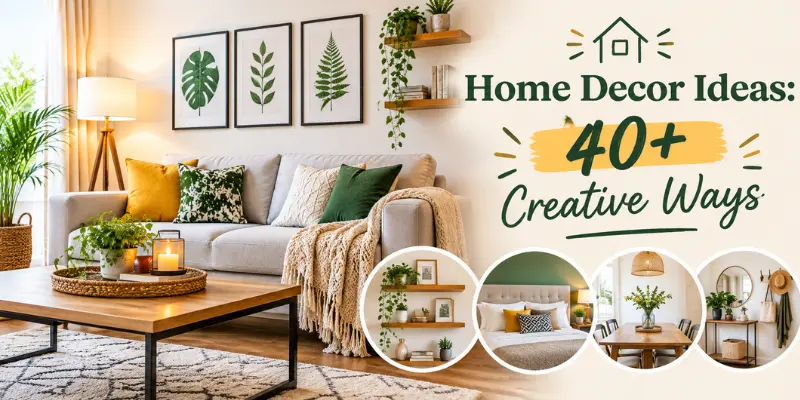
If you are still learning the fundamentals of decorating, our complete guide to home decor can help you understand the basic principles before choosing individual ideas. Once you know what works for your space, you can select decorative details that match your lifestyle, room size, budget, and personal taste.
The best approach is not to copy every attractive room you see online. Instead, choose ideas that solve a specific decorating need. A living room may need a stronger focal point, a bedroom may benefit from softer textures, while a small entryway may simply need better organization. The following home decor ideas are designed to give you practical inspiration without requiring you to redesign your entire home.
Home Decor Ideas for the Living Room
The living room is often the most visible and frequently used space in a home, making it an ideal place to begin. Rather than changing everything at once, concentrate on one or two areas that look unfinished or feel visually unbalanced.
Create a Conversation-Focused Seating Arrangement
Arrange sofas and chairs so they encourage conversation instead of pointing every seat toward a television. A coffee table or area rug can help connect the seating pieces and make the arrangement feel intentional.
Add One Strong Focal Point
Choose one feature that naturally attracts attention. This could be a large piece of artwork, an architectural feature, an attractive console, or a carefully arranged collection of decorative objects. Keeping one dominant focal point can make the room feel more organized.
Layer Decorative Cushions
Decorative cushions are an easy way to introduce color and texture without replacing furniture. Combine different sizes and materials while keeping at least one color or pattern element consistent.
Style the Coffee Table With Purpose
Instead of covering the entire coffee table with accessories, create a small arrangement using a tray, book, vase, or decorative object. Leave enough empty space for everyday use.
Use an Area Rug to Connect Furniture
A correctly sized rug can visually connect the seating arrangement and make the room feel more cohesive. If possible, allow the front legs of major seating pieces to sit on the rug rather than placing a tiny rug in the middle of the room.
For more wall-focused inspiration, you can explore our detailed wall decor ideas guide rather than filling this article with wall-specific decorating advice.
Home Decor Ideas for the Bedroom
A bedroom should feel comfortable and personal rather than overly decorated. Soft materials, balanced lighting, and a limited number of decorative elements can create a more relaxing atmosphere.
Create a Layered Bed
Combine a duvet or comforter with a throw blanket and a few carefully selected pillows. Different textures can add visual depth while keeping the overall arrangement comfortable.
Create a Simple Bedside Display
A bedside table does not need to be completely empty or completely covered. A small lamp, a book, a plant, or one decorative object can provide enough visual interest.
Use Matching Visual Elements
Matching does not mean everything needs to be identical. Repeating a material, finish, or color in two or three areas can make the bedroom feel more coordinated.
Create a Soft Reading Corner
If space allows, place a comfortable chair beside a floor lamp or near a window. A small side table can complete the arrangement without taking up too much room.
Introduce Textiles Around the Room
Curtains, bedding, rugs, cushions, and upholstered furniture can all contribute texture. Using several related materials can make a bedroom feel warmer without adding unnecessary objects.
Home Decor Ideas for the Kitchen
Kitchen decor needs to balance appearance with everyday practicality. Decorative items should not interfere with food preparation, cleaning, or storage.
Display Attractive Everyday Items
Instead of hiding everything inside cabinets, consider displaying a few useful objects such as wooden boards, ceramic containers, or attractive serving pieces. Choose items that are both functional and decorative.
Style Open Shelves Carefully
If your kitchen has open shelving, avoid filling every available space. Leave gaps between groups of objects and combine practical pieces with a few decorative accents.
Create a Small Countertop Display
A tray can help organize a coffee station, cooking oils, or frequently used utensils. Keeping related items together makes the display look intentional while maintaining easy access.
Add Greenery
A small herb planter or low-maintenance plant can introduce natural texture to a kitchen. Choose a location where the plant receives suitable light and does not interfere with food preparation.
Use Decorative Containers
Matching or coordinated containers can make frequently used pantry items look more organized. This approach can be particularly useful when storage is visible.
Home Decor Ideas for the Dining Room
The dining room does not need numerous accessories to feel finished. The dining table itself can become the central decorative feature.
Create a Simple Table Centerpiece
A vase, bowl, candle arrangement, or small plant can work as a centerpiece. Keep the height practical so people can see across the table comfortably.
If you use candles as part of your dining-room decor, remember that they are open flames. The National Fire Protection Association’s candle-safety guidance recommends keeping candles away from anything that can burn and extinguishing them when leaving the room or going to bed.
Use a Statement Light Above the Table
A pendant or chandelier positioned appropriately above the dining table can provide both functional illumination and visual interest. The fixture should complement the size of the table and room.
For energy-conscious lighting choices, ENERGY STAR’s home lighting guidance notes that ENERGY STAR-certified LED bulbs can use substantially less energy and last longer than standard bulbs.
Decorate a Nearby Sideboard
If you have a sideboard or console, use it to display a small group of coordinated objects. A mirror or artwork above it can help complete the composition.
Coordinate Table Linens
Napkins, runners, placemats, and other textiles can introduce seasonal or accent colors without permanently changing the room.
Home Decor Ideas for the Entryway
The entryway creates the first impression of your home. It should therefore combine visual appeal with useful storage.
Add a Practical Console
A narrow console can provide a place for keys, mail, and decorative accessories. In a small entryway, choose furniture that does not obstruct movement.
Create a Drop Zone
Use a bowl, tray, wall hooks, or small organizer to keep everyday items together. A well-designed drop zone can make the area look cleaner while reducing clutter.
Add a Mirror
A mirror can make an entryway feel brighter and visually larger while giving you a convenient place for a final check before leaving home.
Use a Small Rug
A runner or small entry rug can define the area and introduce color or texture. Choose a material that is suitable for the amount of foot traffic the space receives.
Home Decor Ideas for Small Spaces
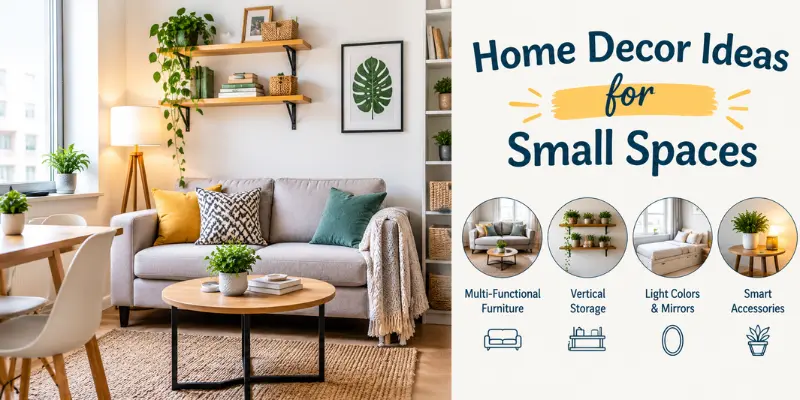
Small rooms benefit from decoration that performs more than one function. The goal is not to fill the available space but to make every decorative choice work harder.
Use Vertical Space
Tall shelving, vertical artwork, or appropriately placed decorative elements can draw the eye upward and make a room feel more spacious.
Choose Furniture With Storage
Ottomans, benches, beds, and side tables with built-in storage can reduce visible clutter while still contributing to the room’s design.
When using tall bookcases, dressers, or other furniture, safety should also be considered. The U.S. Consumer Product Safety Commission’s furniture-safety guidance recommends securing top-heavy furniture and televisions to help prevent tip-over incidents, particularly in homes where children may be present.
Keep Visual Pathways Clear
Avoid placing decorative objects where they block walking routes. Open pathways can make a small room feel less crowded.
Use One Large Decorative Element
Several tiny accessories can sometimes make a small room look busier. One appropriately sized artwork, mirror, or decorative feature may create a stronger result.
Repeat a Limited Color Palette
Using a small number of coordinated colors can create visual continuity between different areas of a compact home.
Budget-Friendly Home Decor Ideas
Decorating on a budget does not mean that your home has to look unfinished. The key is to prioritize changes that produce a noticeable visual difference.
Rearrange Existing Furniture
Before buying anything, experiment with different furniture arrangements. Changing the position of a sofa, chair, table, or bed can completely alter the way a room feels.
Refresh Soft Furnishings
Replacing cushion covers, throws, curtains, or a small rug can change the appearance of a room without requiring new furniture.
Shop Your Own Home
Move artwork, accessories, lamps, or decorative objects from one room to another. Items that feel ordinary in one location may look completely different in another.
Update Small Hardware
Cabinet handles, drawer pulls, or similar small details can influence the overall appearance of furniture and storage units.
Create a Decorative Group
Instead of buying many unrelated accessories, select three or four complementary objects and arrange them together. Grouping can make inexpensive pieces appear more intentional.
For additional guidance on how to approach decorating principles, you can also review our article on what is decor.
DIY Home Decor Ideas
DIY projects can add personality to a home while allowing you to work within a specific budget. However, the best projects are those that suit your skill level and produce a useful result.
Make a Decorative Picture Arrangement
Use several photographs, prints, or illustrations to create a coordinated display. Before putting anything on the wall, arrange the pieces on the floor to test spacing.
Refresh an Old Side Table
A dated side table can sometimes be improved through cleaning, refinishing, repainting, or replacing its hardware. Always use products appropriate for the furniture material.
Create a Simple Decorative Tray
A basic tray can organize small accessories on a coffee table, ottoman, or countertop. It can also make a group of unrelated objects look more cohesive.
Repurpose Attractive Containers
Jars, baskets, boxes, and containers can sometimes be reused as organizers or decorative storage. Make sure they are clean and appropriate for their new purpose.
Create a Seasonal Display
Instead of buying permanent seasonal decorations, create small displays using objects that can be changed throughout the year.
Modern Home Decor Ideas
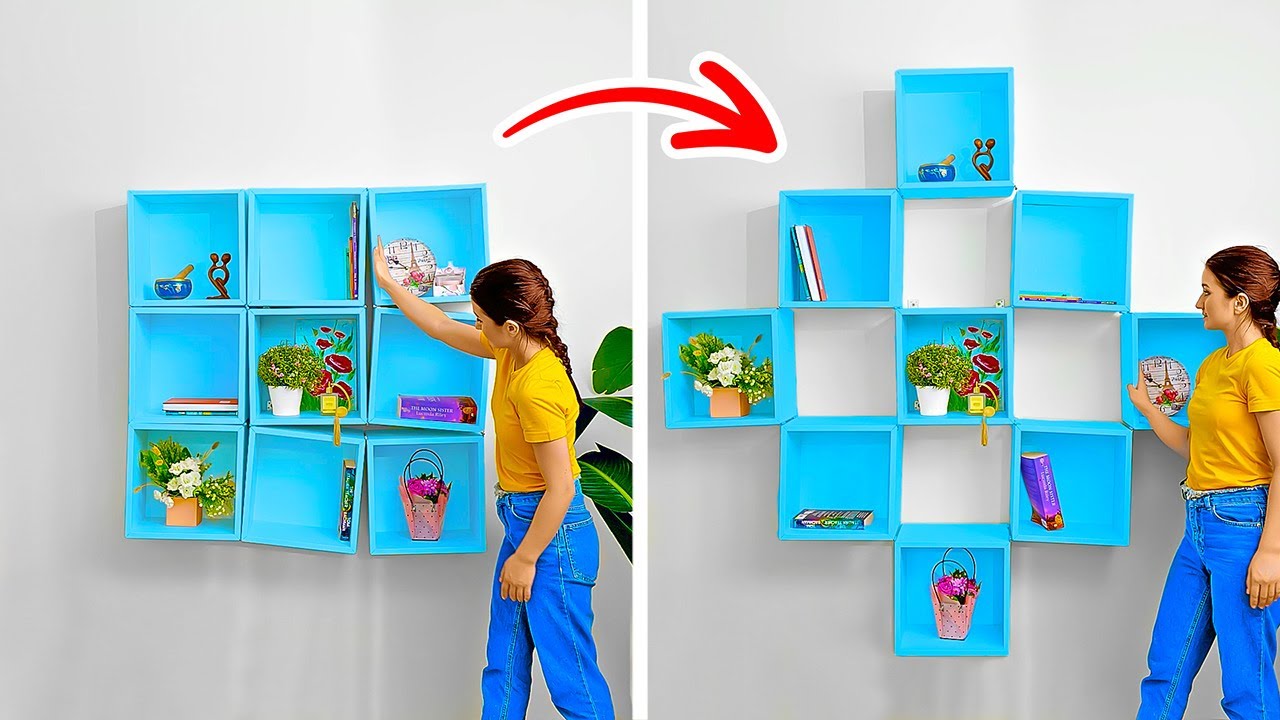
Modern decorating does not necessarily mean filling a room with expensive contemporary furniture. It is often more about simplicity, proportion, clean lines, and intentional choices.
Combine Clean Lines With Soft Textures
Furniture with simple shapes can be balanced with textured cushions, rugs, curtains, or throws. This prevents a modern room from feeling too cold.
Limit Decorative Clutter
Choose fewer accessories and give each one enough visual space. This creates a cleaner appearance and allows important pieces to stand out.
Use Natural Materials
Wood, stone, cotton, linen, and similar materials can introduce warmth and texture into a modern interior.
Choose Responsibly Sourced Wood
When buying wooden furniture or decorative pieces, you can look for credible certification information where appropriate. The Forest Stewardship Council’s certification information explains how FSC certification and chain-of-custody systems relate to responsible forestry and forest-based products.
Repeat One Finish
Repeating a material or finish in several locations can create visual consistency. For example, a particular metal finish might appear in lighting, hardware, and small accessories.
Choose Functional Decoration
Whenever possible, select decorative items that also serve a purpose. A stylish lamp, attractive storage basket, or well-designed mirror can contribute to both function and appearance.
If you want to follow current design directions rather than evergreen decorating principles, our separate guide to what home decor is trending is the more appropriate resource.
Simple Home Decor Ideas
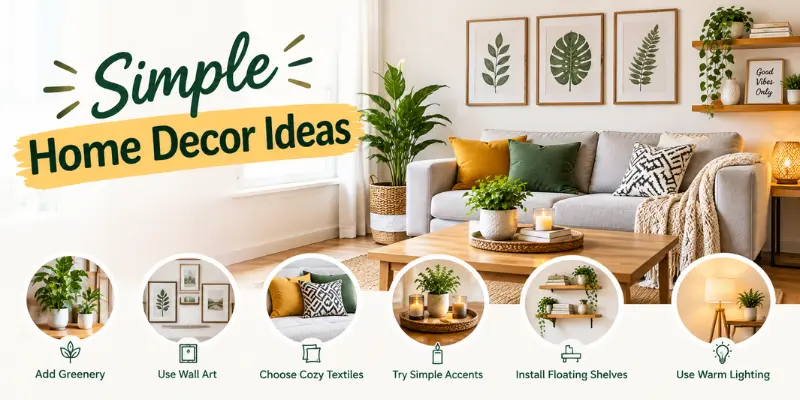
Simple decoration can be especially effective when a room already has attractive architecture or quality furniture.
Declutter One Surface at a Time
Start with a coffee table, shelf, countertop, or bedside table. Removing unnecessary objects can immediately improve the appearance of the room.
Use the Rule of Three
Groups of three objects can often create a balanced decorative arrangement. Vary their height, shape, or texture rather than choosing three identical objects.
Add One New Texture
If a room feels flat, introduce one textured element such as a woven basket, knitted throw, natural-fiber rug, or textured cushion.
Replace One Tired Accessory
You do not need to replace everything. A single outdated lamp, cushion, rug, or decorative object may be enough to refresh the appearance.
Create More Empty Space
Empty space is part of good decoration. Leaving some shelves, walls, and surfaces open can help important objects receive more visual attention.
Home Decor Ideas for a More Organized Home
Organization and decoration can work together. A well-organized room often looks more attractive because fewer unnecessary objects compete for attention.
Use Decorative Baskets
Baskets can hide blankets, toys, magazines, or other frequently used items while contributing texture to the room.
Style Storage Shelves
Combine books, baskets, plants, and decorative objects rather than filling shelves with only one type of item. Keep enough open space to prevent a crowded appearance.
Create Dedicated Places for Everyday Items
Keys, remote controls, chargers, shoes, and other frequently misplaced items should have designated locations. Decorative organizers can make these systems look intentional.
Use Closed Storage for Visual Clutter
Items that are necessary but unattractive can often be stored behind cabinet doors, drawers, or storage boxes. This leaves decorative pieces more prominent.
Keep Frequently Used Areas Easy to Maintain
A beautiful decorating idea is only useful if you can maintain it. Avoid arrangements that require constant rearranging or cleaning.
Home Decor Ideas for Adding Personality
Your home should reflect the people who live there rather than looking like a showroom.
Display Meaningful Objects
Travel souvenirs, family photographs, handmade items, books, or inherited pieces can make a room feel personal.
Mix Different Eras
Combining older and newer pieces can create depth and prevent the room from looking overly coordinated.
Use Artwork You Actually Like
Artwork does not need to match every cushion or piece of furniture. Choose pieces that connect with your personality and then use the surrounding decor to support them.
Create a Personal Collection
A small collection of ceramics, books, photographs, plants, or other objects can become a recognizable feature of a room.
Leave Room for Change
Not every wall or shelf needs to be permanently finished. Leaving some flexibility makes it easier to introduce new pieces later.
Home Decor Ideas for a Healthier-Feeling Home
Decorating choices can also affect how comfortable a home feels. Appearance should not be the only consideration when choosing paints, finishes, furnishings, or other products.
Pay Attention to Product Materials
Paints, finishes, adhesives, furnishings, and some household products can release volatile organic compounds, commonly called VOCs. The U.S. Environmental Protection Agency’s guide to VOCs and indoor air quality explains that many household products and furnishings can be sources of VOCs indoors.
This does not mean every product containing VOCs is automatically unsafe. Instead, follow product instructions, provide suitable ventilation when using products that may release VOCs, and consider lower-emission options where appropriate.
Keep Rooms Well Ventilated
When painting, refinishing furniture, or using products that release fumes, adequate ventilation can help reduce indoor pollutant concentrations. EPA guidance also emphasizes source control and ventilation as important approaches to improving indoor air quality.
Choose Easy-to-Clean Textiles
For busy homes, washable or durable textiles can make maintenance easier. This is particularly useful for rugs, cushion covers, curtains, and upholstery that receive frequent use.
Avoid Decorative Overcrowding
Too many objects can increase dusting and maintenance. A smaller number of carefully selected pieces can make the room attractive while keeping routine cleaning manageable.
How to Choose the Right Home Decor Ideas
With so many decorating possibilities available, choosing too many ideas can become its own problem. Start by identifying what you want to improve.
If a room feels empty, consider adding texture, artwork, plants, or a carefully selected focal point. If it feels crowded, remove unnecessary objects before buying new ones. If it feels disconnected, repeat colors, materials, or shapes across different areas.
Room size should also influence your choices. Large spaces can usually accommodate bigger decorative features, while compact rooms often benefit from fewer and more purposeful pieces.
Your lifestyle matters as well. A home with children, pets, frequent guests, or heavy daily use may require more durable and easy-to-clean materials than a low-traffic space.
Budget should be considered before shopping. Decide which changes will have the greatest visual impact and complete those first. This prevents spending money on accessories that later become unnecessary.
Most importantly, decoration should support how you actually use your home. A beautiful decorating idea that makes everyday activities difficult is unlikely to remain successful.
Common Home Decor Mistakes to Avoid
Even good home decor ideas can produce poor results when they are used without considering the room as a whole.
Using Too Many Accessories
A large collection of decorative objects can make a room feel crowded. Give your favorite pieces enough space to stand out.
Choosing Furniture That Is Too Large
Always consider scale before purchasing furniture. A beautiful piece can make a room uncomfortable if it restricts movement.
Following Every Trend
Trends can provide inspiration, but using too many temporary styles at once can make a home feel inconsistent. Choose elements that work with your existing space and personality.
Ignoring Lighting
Decorative details may not look their best under poor lighting. Consider how natural and artificial light affect colors and textures throughout the day.
Decorating Without a Focal Point
If everything competes for attention, the room can feel visually confusing. Decide which feature should attract attention first.
Buying Before Measuring
Measure available space before purchasing furniture, rugs, shelving, or large decorative pieces. This simple step can prevent expensive mistakes.
Choosing Appearance Over Function
A decorative item should not make an important part of your home harder to use. Good decorating balances appearance, comfort, and practicality.
How Often Should You Refresh Your Home Decor?
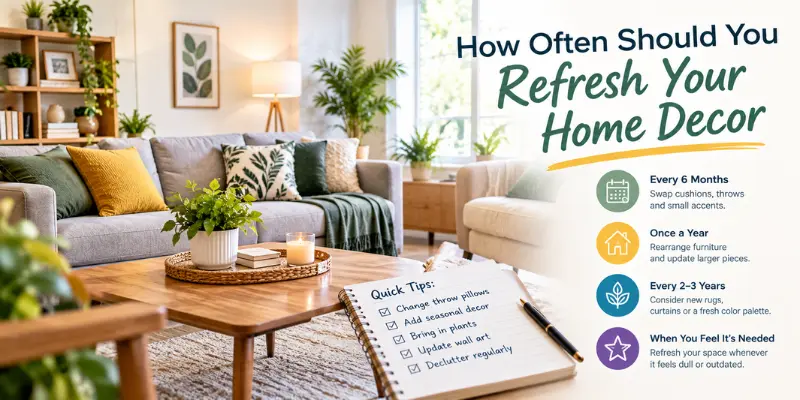
There is no universal schedule for updating home decor. Some changes may be seasonal, while others may remain appropriate for many years.
Small updates such as cushions, accessories, plants, or table displays can be changed whenever your needs or preferences change. Larger purchases should generally be evaluated more carefully because quality furniture and fixtures are expected to last longer.
Instead of changing your entire home simply because a new trend appears, look for signs that a room genuinely needs attention. Worn textiles, damaged accessories, changing household needs, or a layout that no longer works are more useful reasons to update.
The goal is not to constantly replace your decor. It is to keep your home comfortable, functional, and visually enjoyable.
Final Thoughts
The best home decor ideas are not necessarily the most expensive or complicated ones. A thoughtful furniture arrangement, a better focal point, a carefully chosen textile, useful storage, or a small collection of personal objects can make a meaningful difference.
Start with one room and identify the biggest opportunity. Then choose a few ideas that support the room’s purpose, available space, and your budget. Avoid trying to change everything at once.
If you need broader decorating guidance, start with our Home Decor guide. For wall-specific inspiration, explore the Wall Decor Ideas guide. Keeping these topics connected but separate allows you to explore specific decorating ideas without losing sight of the overall design of your home.
FAQs About Home Decor Ideas
What are the easiest home decor ideas for beginners?
Start with simple changes such as rearranging furniture, adding cushions or throws, improving lighting, introducing plants, organizing visible clutter, or creating a focal point. These changes can improve a room without requiring major renovation.
How can I decorate my home on a small budget?
Begin by using what you already own. Rearrange furniture, move accessories between rooms, refresh textiles, organize visible clutter, and create small decorative groupings. When purchasing something new, prioritize items that make a noticeable difference.
How can I make a small room look better?
Keep pathways open, avoid excessive accessories, use appropriately sized furniture, take advantage of vertical space, and maintain a limited color palette. Mirrors and well-placed lighting can also contribute to a more open visual effect.
Should every room have the same decor style?
Not necessarily. Different rooms can have their own character while still sharing a few common colors, materials, finishes, or design principles. These repeated elements help the entire home feel connected.
What home decor ideas add the most personality?
Meaningful artwork, photographs, books, travel objects, handmade pieces, collections, and items with personal history can make a home feel more individual. The goal is to display things that have meaning rather than simply filling empty space.
Can home decor ideas improve functionality?
Yes. Decorative storage, practical furniture, organized displays, suitable lighting, rugs that define areas, and well-planned entryway systems can improve both appearance and everyday use.
How many decorative items should I use in a room?
There is no fixed number. The appropriate amount depends on room size, furniture, and personal preference. A useful approach is to add items gradually and stop when the room feels balanced rather than continuing to fill empty surfaces.




- Be Respectful
- Stay Relevant
- Stay Positive
- True Feedback
- Encourage Discussion
- Avoid Spamming
- No Fake News
- Don't Copy-Paste
- No Personal Attacks
- Be Respectful
- Stay Relevant
- Stay Positive
- True Feedback
- Encourage Discussion
- Avoid Spamming
- No Fake News
- Don't Copy-Paste
- No Personal Attacks
