How to Sharpen Kitchen Knives: At Home Step-by-Step Guide for Beginners
Published: 18 Apr 2026
Introduction
A sharp knife is one of the most important tools in any kitchen. It makes cooking faster, safer, and more efficient. However, over time, every knife becomes dull and requires proper sharpening. Learning how to sharpen kitchen knives correctly can save time, improve food preparation, and reduce kitchen accidents.To more kitchen improvement also read How to Get Rid of Fruit Flies in Kitchen.
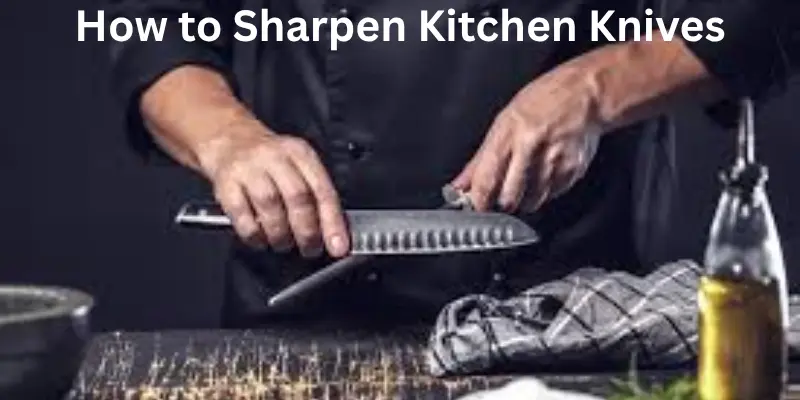
This guide explains simple and professional methods, tools, safety techniques, and maintenance tips so you can master how to sharpen kitchen knives at home without needing expensive services.
1. How to Sharpen Kitchen Knives at Home (Step-by-Step Guide)
Learning how to sharpen kitchen knives at home is easy when you follow the correct process.
Step-by-Step Method
Step 1: Choose the right tool
- Whetstone
- Honing rod
- Knife sharpener
Step 2: Set correct angle
- 15–20 degrees for most kitchen knives
Step 3: Start sharpening
- Slide knife across stone or sharpener
- Maintain consistent angle
Step 4: Repeat both sides
- 10–15 strokes per side
Step 5: Test sharpness
- Slice paper or tomato
This method is the foundation of how to sharpen kitchen knives effectively at home.
2. Best Tools for How to Sharpen Kitchen Knives
Using the right tools improves results significantly.
Recommended Tools
- Whetstone (best for precision)
- Honing rod (for maintenance)
- Electric sharpener (fast results)
- Manual pull-through sharpener
Each tool supports different levels of how to sharpen kitchen knives depending on your skill.
3. How to Sharpen Kitchen Knives Using a Whetstone
Whetstone is the most professional method.
Steps
- Soak stone in water for 10–15 minutes
- Place on stable surface
- Hold knife at 15–20° angle
- Slide blade across stone
- Repeat on both sides
Whetstone sharpening gives the best long-term results in how to sharpen kitchen knives.
4. How to Sharpen Kitchen Knives with a Honing Rod
Honing rod does not sharpen but aligns the blade.
Steps
- Hold rod vertically
- Slide knife down at angle
- Repeat 5–10 times per side
This is important for maintaining how to sharpen kitchen knives results between sharpening sessions.
5. Mistakes to Avoid While Learning How to Sharpen Kitchen Knives
Common mistakes can damage blades.
Mistakes
- Using wrong angle
- Applying too much pressure
- Not sharpening both sides equally
- Using cheap tools
Avoiding these improves your success in how to sharpen kitchen knives.
6. How Often Should You Sharpen Kitchen Knives?
Frequency depends on usage.
Guidelines
- Light use: every 2–3 months
- Regular use: monthly
- Heavy use: every 2 weeks
Proper timing ensures consistent performance in how to sharpen kitchen knives.
7. Safety Tips for How to Sharpen Kitchen Knives
Safety is extremely important.
Safety Rules
- Always sharpen away from body
- Use stable surface
- Keep fingers away from blade edge
- Dry hands before handling
Safety ensures smooth process while learning how to sharpen kitchen knives.
8. How to Test If Kitchen Knives Are Sharp
Testing confirms results.
Methods
- Paper test (clean cut)
- Tomato test (smooth slicing)
- Onion test (no crushing)
Testing is essential after learning how to sharpen kitchen knives.
9. Maintenance Tips After How to Sharpen Kitchen Knives
Proper care keeps knives sharp longer.
Tips
- Wash and dry immediately
- Store in knife holder
- Use wooden cutting boards
- Avoid dishwashers
Maintenance extends results of how to sharpen kitchen knives.
10. Difference Between Sharpening and Honing
Many beginners confuse both.
Sharpening
- Removes metal
- Restores blade edge
Honing
- Aligns edge
- Does not remove metal
Understanding both improves how to sharpen kitchen knives skills.
Cutting surface affects blade life.
Best Options
- Wooden boards
- Bamboo boards
- Plastic boards
Avoid glass or stone surfaces for better results in how to sharpen kitchen knives.
Both methods have advantages.
DIY Sharpening
- Affordable
- Convenient
- Requires practice
Professional Sharpening
- Precise
- Time-saving
- Expensive
DIY is enough for most people learning how to sharpen kitchen knives.
11. How to Store Kitchen Knives After Sharpening
Storage affects sharpness.
Storage Options
- Magnetic strips
- Knife blocks
- Blade guards
Proper storage protects results of how to sharpen kitchen knives.
Different knives need different care.
Types
- Chef knife – frequent sharpening
- Paring knife – light sharpening
- Bread knife – minimal sharpening
Understanding types improves how to sharpen kitchen knives knowledge.
12. Eco-Friendly Knife Care Tips
Sustainable practices help long-term use.
Tips
- Use natural cleaning solutions
- Avoid disposable sharpeners
- Maintain instead of replacing
Eco-care supports responsible use of how to sharpen kitchen knives.
13. Best Kitchen Knife Brands for Beginners
Choosing the right brand helps beginners avoid poor-quality knives.
Recommended Beginner-Friendly Brands
- Victorinox (lightweight and affordable)
- Wüsthof (durable German quality)
- Zwilling Henckels (balanced and strong)
- Arcos (budget-friendly European brand)
What to Look For
- Stainless steel blade
- Comfortable handle
- Full tang construction
Good beginner knives improve learning and safety while cooking.
14. How to Clean Kitchen Knives Properly
Proper cleaning extends knife life.
Cleaning Steps
- Wash immediately after use
- Use mild soap and warm water
- Avoid dishwasher
- Dry immediately with cloth
Never leave knives wet to prevent damage and rust.

15. Differences Between Steel Types in Knives
Steel type affects sharpness and durability.
Main Types
- Stainless Steel – rust resistant, low maintenance
- Carbon Steel – very sharp but rusts easily
- High-Carbon Stainless – balanced performance
Key Insight
High-carbon stainless steel is the best option for most home cooks.
16. How to Prevent Knife Rust at Home
Rust weakens blades and reduces safety.
Prevention Tips
- Always dry knives after washing
- Store in dry place
- Apply light oil occasionally
- Avoid soaking in water
Moisture control is the key to rust prevention.
17. Best Knife Sets for Home Kitchens
A good set improves cooking efficiency.
Essential Set Includes
- Chef’s knife
- Paring knife
- Bread knife
Features to Choose
- Full tang design
- Stainless steel blades
- Comfortable grip handles
A simple set is better than a large unnecessary collection.
18. Knife Safety Rules for Beginners
Safety is more important than speed.
Rules
- Always cut away from body
- Keep fingers curled inward
- Use stable cutting board
- Never leave knives in sink
Safe handling prevents kitchen injuries.
19. How to Sharpen Scissors at Home
Scissors also lose sharpness over time.
Methods
- Aluminum foil cutting method
- Sandpaper sharpening
- Whetstone technique
Simple sharpening restores cutting efficiency.
20. Kitchen Tool Maintenance Checklist
Regular maintenance improves tool life.
Checklist
- Wash tools after use
- Dry immediately
- Check for rust weekly
- Sharpen knives monthly
- Store properly
Consistent care ensures long-term performance.
21. Best Cutting Techniques for Vegetables
Proper cutting improves speed and safety.
Techniques
- Rocking motion for herbs
- Slice for onions
- Dice for uniform cooking
- Julienne for thin strips
Good technique reduces effort and improves presentation.
Chefs use advanced techniques for speed and safety.
Tips
- Use pinch grip for control
- Keep knife angle consistent
- Use sharp knife only (safer than dull)
- Practice smooth motion
Professional handling improves accuracy and efficiency.
22. Best Kitchen Cutting Boards for Kitchen Knives
Choosing the right cutting board protects your knives and improves hygiene.
Best Materials
- Wooden cutting boards (gentle on knives)
- Bamboo boards (eco-friendly but harder surface)
- Plastic boards (easy to clean, budget-friendly)
Important Tip
Avoid glass or marble boards as they damage knife edges quickly.
23. How to Choose Chef Knife vs Santoku Knife
Both knives are essential but serve different styles.
Chef Knife
- Curved blade
- Best for rocking motion
- Good for meat and vegetables
Santoku Knife
- Flat blade
- Best for slicing and chopping
- Lightweight and precise
Chef knives suit Western cooking styles, while Santoku is ideal for precision cutting and Asian-style cooking.
24. Kitchen Knife Sharpening Guide for Beginners
Sharpening keeps knives effective and safe.
Steps
- Use whetstone or sharpener
- Maintain 15–20° angle
- Sharpen both sides evenly
- Test with tomato or paper
Regular sharpening improves performance and safety.
25. How to Store Kitchen Knives Safely
Proper storage prevents accidents and dulling.
Storage Methods
- Magnetic strips
- Knife blocks
- Blade guards
Never store knives loose in drawers to avoid injuries.
26. Differences Between Japanese and German Knives
Knife styles differ in design and performance.
Japanese Knives
- Lighter and thinner
- Extremely sharp
- More precise but delicate
German Knives
- Heavier and durable
- Slightly thicker blade
- Better for tough cutting tasks
Japanese knives focus on precision, while German knives focus on durability.
27. Best Budget Kitchen Tool Sets
A basic set is enough for most home kitchens.
Essential Items
- Chef knife
- Paring knife
- Cutting board
- Peeler
- Scissors
Budget sets are ideal for beginners and small kitchens.
28. How to Maintain Wooden Kitchen Handles
Wooden handles need care to last longer.
Maintenance Tips
- Clean with damp cloth
- Avoid soaking in water
- Apply mineral oil occasionally
- Keep dry after washing
Proper care prevents cracking and damage.
29. Knife Sharpening Tools Comparison
Different tools give different results.
Tools
- Whetstone – most precise
- Honing rod – maintains edge
- Electric sharpener – fast but less control
- Manual sharpener – beginner-friendly
Whetstones provide the best long-term sharpening results.
34. Common Kitchen Injuries and Prevention Tips
Safety is very important in kitchen work.
Common Injuries
- Cuts from sharp knives
- Slips on wet floors
- Burns from hot surfaces
Prevention
- Use stable cutting boards
- Keep knives sharp (dull knives are dangerous)
- Maintain clean workspace
- Focus while cutting
30. Essential Kitchen Tools Every Home Must Have
A basic kitchen setup improves efficiency.
Must-Have Tools
- Chef knife
- Cutting board
- Mixing bowls
- Measuring cups
- Spatula
- Peeler
- Scissors
These tools cover most daily cooking needs.
FAQs
1. What is the best kitchen knife brand for beginners?
Victorinox and Wüsthof are popular beginner-friendly options.
2. How often should I sharpen kitchen knives?
Every 1–3 months depending on usage.
3. Which steel is best for kitchen knives?
High-carbon stainless steel is the most balanced choice.
4. How do I prevent knife rust?
Keep knives dry and store them properly.
5. Is it safe to put knives in dishwasher?
No, it damages blades and causes dullness.
6. What is the safest cutting technique?
Using a stable board and keeping fingers curled inward
Summary
Kitchen tools and knives are essential for safe and efficient cooking. Choosing the right cutting boards, understanding knife types, maintaining sharpness, and following safety rules all contribute to a better kitchen experience.
Conclusion
A well-equipped kitchen is not about having more tools but about choosing the right ones and maintaining them properly. From knife selection to storage and safety, every detail improves cooking performance and reduces risks.
By applying these kitchen tool and knife tips, you can create a safer, more efficient, and more professional cooking environment at home.
.






- Be Respectful
- Stay Relevant
- Stay Positive
- True Feedback
- Encourage Discussion
- Avoid Spamming
- No Fake News
- Don't Copy-Paste
- No Personal Attacks
- Be Respectful
- Stay Relevant
- Stay Positive
- True Feedback
- Encourage Discussion
- Avoid Spamming
- No Fake News
- Don't Copy-Paste
- No Personal Attacks
