Gas vs Electric Pressure Washers for Home Cleaning Projects
Published: 21 Jul 2026
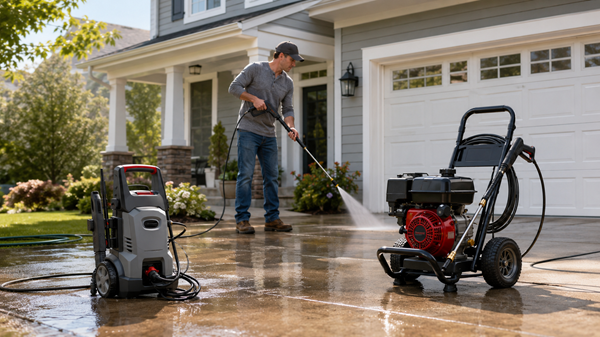
A stained driveway can make the whole front of your home look neglected. Green buildup on a deck creates the same problem. You may grab a garden hose, start spraying, and quickly realize it lacks enough force.
An Electric Pressure Washer can handle many of these household jobs without turning a Saturday cleanup into a major project. However, a gas model offers more power for thick grime and larger outdoor areas. Choosing between them is not always as simple as comparing pressure ratings.The right machine depends on what you plan to clean, how often you will use it, and where you will store it. Noise, maintenance, operating costs, and property size also matter. This guide compares both options so New Jersey homeowners can choose confidently.
Why the Wrong Pressure Washer Makes Cleaning More Difficult
Pressure washers look fairly simple. Water enters one side, and a powerful spray exits the other. Yet choosing the wrong unit can leave you with poor results or damaged surfaces.A weak machine may take too long to clean a large concrete driveway. You might repeatedly pass over the same section without removing deep stains. On the other hand, excessive pressure can scar wood, strip paint, or force water behind vinyl siding.
Think about the surfaces around your home. A car, wooden deck, concrete walkway, and brick wall do not need equal pressure. Buying the strongest available machine could create more problems than it solves.Convenience matters too. A heavy gas unit may feel unnecessary if you only wash patio furniture twice a year. Meanwhile, a small electric-powered pressure washer might frustrate someone cleaning a long driveway every month. The goal is to match the equipment with the actual workload.
Gas vs Electric Pressure Washers: Differences You Will Notice
Machine specifications can look confusing at first. Two numbers deserve attention: PSI and GPM. PSI measures water pressure, while GPM shows how much water moves through the machine each minute.Higher pressure helps break dirt away from a surface. Greater water flow carries that dirt away. A machine with balanced pressure and flow will often clean faster than one marketed only around a high PSI number.
Power and cleaning speed
Gas machines generally provide more pressure and water flow. That extra output works well on concrete, masonry, fencing, and large outdoor areas. A gas-powered cleaning machine can also tackle old grime that a smaller unit may struggle to remove.Electric models are usually better suited to lighter residential work. They can clean vehicles, outdoor furniture, vinyl siding, small patios, and moderately dirty walkways. Their gentler output also makes surface damage less likely when used correctly.
Movement and operating range
A gas unit does not need an electrical outlet. You can move around a large property without managing a power cord. You will still need enough hose length and a suitable water connection.Electric units must remain within reach of a safe outlet. Cord management can become annoying around vehicles, steps, and garden beds. Still, this limitation may not matter on a compact New Jersey property.
Noise and exhaust
Electric machines start quickly and operate more quietly. That can be valuable in townhome communities or neighborhoods where houses sit close together.Gas engines create more noise and exhaust. They must operate outdoors in a well-ventilated location. Never run one inside a garage, basement, or enclosed shed, even if a door is open.
Where Electric Pressure Cleaning Makes Home Care Easier
Picture a typical spring weekend. You want to rinse winter residue from the siding, clean the patio, and wash two vehicles. You do not need extreme pressure. You need something easy to set up and put away.A compact electric cleaning unit fits that situation well. Plug it into an appropriate outdoor outlet, connect the water supply, and begin cleaning. There is no fuel to mix, engine oil to check, or pull cord to fight with.
Electric units also tend to weigh less. Moving one from the garage to the backyard feels manageable for most adults. Storage is easier because the machine usually occupies less floor space.Maintenance remains fairly simple. You should inspect the hose, clean the inlet filter, drain the water, and protect the pump from freezing. However, there is no small engine requiring regular fuel and oil care.
An electric model makes sense for:
- Cars, bicycles, and garden tools
- Outdoor furniture and rubbish bins
- Small patios and walkways
- Vinyl siding with the correct nozzle
- Light deck and fence cleaning
- Occasional seasonal maintenance
Care is still necessary. Even a residential electric pressure cleaner can damage paint or soft wood at close range. Begin with a wide spray pattern, keep a safe distance, and test a hidden area first.
Jobs Where Gas Power May Be Worth the Extra Work
Some cleaning projects demand more strength. Consider a wide driveway covered with years of embedded dirt and vehicle stains. A light-duty unit may remove surface dust but leave darker marks behind.Gas Pressure Washers are useful for large concrete areas, long fences, stone walls, and heavily soiled equipment. Their higher water flow can cover more ground and reduce repeated passes. Contractors and property owners with frequent heavy cleaning needs may also value their longer operating range.
However, that stronger performance brings added responsibility. Gas machines are heavier, louder, and more demanding to maintain. They require fresh fuel, routine engine checks, and careful storage. Starting one may also take more effort than pressing a switch.
Fuel should not remain in the tank for long periods without proper treatment. Old fuel may cause starting problems or damage the fuel system. The engine oil must also stay at the recommended level.For someone cleaning a small patio twice a year, the added maintenance may outweigh the benefit. However, gas-powered pressure washers could save hours on a large property. Their extra power makes sense when the workload truly requires it.
Match the Machine to Your Surface, Budget, and Routine
Here is where buyers sometimes get stuck. They compare prices without first listing their cleaning projects. A more useful approach begins with the surfaces around the property.
Start with the surface
Painted siding, vehicles, and wooden furniture need controlled pressure. Concrete and masonry can tolerate stronger cleaning, although poor technique can still leave visible lines or surface damage.
Nozzle choice changes how force reaches the surface. A narrow spray concentrates power in a small area. A wider nozzle spreads it out and offers better control. Avoid beginning with the most aggressive nozzle simply because the stain looks difficult.
Calculate ownership costs
Electric models often cost less to purchase and operate. They do not require gasoline, oil changes, spark plugs, or engine servicing. For occasional home use, that lower upkeep can provide better long-term value.Gas machines may cost more upfront and over time. However, faster cleaning on large surfaces can justify the expense. Spending less on a weak machine is not a saving if every job takes twice as long.
Accessories also affect the budget. A surface cleaner can speed up driveway work and create more even results. Extension hoses, detergent attachments, replacement nozzles, and pump protection products add to the final cost.
Be honest about frequency
If you clean cars, furniture, and a small patio a few times yearly, electric power will probably cover your needs. Frequent concrete cleaning or work across a larger property may point toward gas.For a single demanding project, renting can be smarter than buying. You gain access to stronger equipment without accepting years of storage and maintenance.
Costly Pressure-Washing Mistakes You Can Easily Avoid
Pressure alone does not guarantee a cleaner surface. Technique has a huge effect on the final result. Holding the nozzle too close is one of the most common errors. It can carve lines into wood and leave uneven marks across concrete.Another mistake is spraying upward beneath siding. Water may enter gaps and become trapped behind the panels. Aim the spray at a controlled downward angle and avoid direct pressure around vents, windows, and electrical fixtures.Cold weather creates a separate concern in New Jersey. Water left inside a hose or pump may freeze, expand, and crack internal parts. Drain the system fully and follow the manufacturer’s winter storage directions.
Electrical safety deserves equal attention. Use a properly grounded outdoor outlet with GFCI protection. If the manufacturer permits an extension cord, choose one rated for outdoor use and the required electrical load. Keep every connection away from standing water.Do not confuse outdoor pressure-washing equipment with an Industrial Floor Scrubber. A scrubber is designed for hard indoor floors found in warehouses, shops, schools, and commercial facilities. It uses brushes or pads to agitate dirt and usually recovers dirty water.
A Practical Choice for New Jersey Homeowners
The right answer depends less on marketing claims and more on your regular cleaning routine. An electric unit suits compact properties, close neighborhoods, and light-to-moderate household work. It starts easily, runs quietly, and needs limited maintenance.Gas power is more appropriate for large driveways, stubborn buildup, and frequent heavy use. The added pressure and water flow can shorten demanding jobs, but fuel care and engine servicing come with the package.Write down your three most common cleaning projects. Then compare surface type, total area, available storage, and expected use. This quick exercise will tell you more than choosing the highest number printed on a box.
Pressure King can help New Jersey customers compare equipment based on real cleaning needs. Clear guidance is especially helpful when you are unsure whether extra power will save time or simply add cost.
Frequently Asked Questions
Is an electric pressure washer strong enough for a driveway?
Yes, it can clean small or moderately dirty driveways. Deep stains and large concrete areas may take longer. A compatible surface-cleaner attachment can make the work faster and more even.
Can a gas pressure washer damage vinyl siding?
Yes. Excessive pressure or poor spraying angles may crack panels, remove paint, or push water behind the siding. Use a wide nozzle, maintain distance, and test a small area first.
What PSI should I choose for home cleaning?
The answer depends on the surface rather than one universal rating. Vehicles and painted surfaces need gentler treatment, while concrete can accept more pressure. Always follow the surface and equipment manufacturer’s guidance.
Can I use an extension cord with an electric model?
Only if the manufacturer allows it. The cord must be grounded, rated for outdoor use, and suitable for the machine’s electrical requirements. An undersized cord may overheat or reduce performance.
How should I store a pressure washer during winter?
Disconnect the hoses and drain all remaining water. Protect the pump according to the manufacturer’s directions. Store the machine in a dry place where its internal parts will not freeze.

Cheap Outdoor Patio Furniture Covers: Best Budget Options to Protect Your Patio Furniture (2026)





- Be Respectful
- Stay Relevant
- Stay Positive
- True Feedback
- Encourage Discussion
- Avoid Spamming
- No Fake News
- Don't Copy-Paste
- No Personal Attacks
- Be Respectful
- Stay Relevant
- Stay Positive
- True Feedback
- Encourage Discussion
- Avoid Spamming
- No Fake News
- Don't Copy-Paste
- No Personal Attacks
