How to Deep Clean Kitchen: Complete Cleaning Guide for a Spotless Space
Published: 25 May 2026
ntroduction
Learning How to deep clean kitchen spaces properly is essential for maintaining a healthy, hygienic, and organized home. The kitchen is one of the most frequently used areas in any house, making it highly vulnerable to grease buildup, food spills, bacteria, and unpleasant odors. While daily wiping and quick cleaning routines help maintain surface cleanliness, they are not enough to remove hidden grime and deep-seated dirt. The article When Remodeling a Kitchen What Comes First also provide much information in this regard.

A complete kitchen deep cleaning routine helps improve food safety, extends the life of appliances, enhances indoor air quality, and creates a more pleasant cooking environment. Understanding How to deep clean kitchen areas step by step can make the task easier, more effective, and less time-consuming. This guide explains every important aspect of kitchen deep cleaning in detail so homeowners can maintain a spotless and sanitary kitchen all year round.
Why Deep Cleaning Your Kitchen Is Important
Understanding How to deep clean kitchen spaces begins with knowing why deep cleaning matters. Kitchens accumulate grease, crumbs, stains, bacteria, and moisture daily. Over time, these contaminants can create unhealthy conditions and attract pests.
Deep cleaning removes harmful bacteria that regular wiping may miss. Food preparation surfaces, sinks, countertops, and appliances can harbor germs that may lead to foodborne illnesses. Thorough cleaning also eliminates unpleasant odors caused by spoiled food, grease buildup, and hidden dirt.
Another major benefit of learning How to deep clean kitchen areas is improved appliance performance. Refrigerators, ovens, microwaves, and dishwashers work more efficiently when they are cleaned regularly. Deep cleaning also improves the overall appearance of the kitchen, creating a fresh and welcoming atmosphere for cooking and family gatherings.
Supplies Needed to Deep Clean Kitchen
Before starting the cleaning process, gathering the right supplies is important. Having all necessary tools ready makes learning How to deep clean kitchen areas easier and more organized.
Essential cleaning supplies include microfiber cloths, scrub brushes, sponges, paper towels, rubber gloves, mops, buckets, and a vacuum cleaner. Cleaning products such as dish soap, baking soda, vinegar, disinfectant spray, degreasers, and glass cleaner are also highly useful.
Natural cleaning solutions are becoming increasingly popular because they are environmentally friendly and cost-effective. Baking soda and vinegar are especially useful for removing grease, stains, and odors. Keeping all cleaning supplies within reach can save time and help maintain momentum during the cleaning process.
How to Prepare Before Deep Cleaning the Kitchen
Preparation is a critical step in understanding How to deep clean kitchen spaces effectively. A well-prepared kitchen allows easier access to surfaces and reduces interruptions during cleaning.
Start by removing clutter from countertops, tables, and floors. Put away unnecessary items and organize kitchen tools. Empty cabinets, pantry shelves, and refrigerators if they require cleaning. Throw away expired food items and old packaging materials.
Proper ventilation is also important. Open windows and doors to allow fresh air to circulate throughout the kitchen. Wearing gloves protects the skin from harsh cleaning products and prolonged moisture exposure. Creating a cleaning checklist beforehand can help ensure that no area is overlooked during the deep cleaning process.
Step-by-Step Guide on How to Deep Clean Kitchen
The best way to approach How to deep clean kitchen tasks is by cleaning from top to bottom. This prevents dust and debris from falling onto areas that have already been cleaned.
Begin by dusting ceilings, vents, and light fixtures. Grease and dust often collect in these upper areas. Next, move to walls, cabinets, and countertops before cleaning appliances and floors.
Divide the kitchen into sections to make the task more manageable. Cleaning one area at a time improves focus and ensures a more detailed cleaning process. Always allow cleaning products to sit for a few minutes before scrubbing because this helps loosen grease and stains more effectively.
How to Deep Clean Kitchen Cabinets
Kitchen cabinets collect grease, fingerprints, and food splatters over time. Proper cabinet maintenance is an important part of learning How to deep clean kitchen spaces.
Start by emptying the cabinets completely. Use a vacuum cleaner to remove crumbs and dust from corners and shelves. Wipe interior surfaces using warm water mixed with mild dish soap. For stubborn grease stains, apply a baking soda paste and scrub gently with a sponge or soft brush.
Cabinet doors and handles should also be disinfected thoroughly because they are touched frequently throughout the day. Dry all surfaces completely before placing items back inside the cabinets to prevent moisture buildup and mold growth.
How to Deep Clean Kitchen Countertops
Countertops are among the most heavily used kitchen surfaces, making them a major focus when learning How to deep clean kitchen areas.
Different countertop materials require different cleaning methods. Granite and marble surfaces should be cleaned with mild soap and water because acidic products may damage the finish. Laminate countertops can be disinfected with vinegar solutions, while quartz surfaces benefit from non-abrasive cleaners.
Always remove all items from the countertop before cleaning. Pay special attention to corners, seams, and areas around sinks where bacteria and moisture tend to accumulate. Sanitizing countertops regularly helps maintain food safety and prevents cross-contamination.
How to Deep Clean Kitchen Sink
The kitchen sink is one of the dirtiest areas in the kitchen because it constantly comes into contact with food particles, dirty dishes, and moisture.
To properly understand How to deep clean kitchen sinks, begin by rinsing away loose debris. Sprinkle baking soda across the sink surface and scrub gently using a sponge. White vinegar can be used to remove stains and mineral deposits while also disinfecting the surface.
Drains should also be cleaned thoroughly. Pour baking soda followed by vinegar into the drain, then flush with hot water to eliminate odors and buildup. Sink faucets and handles should be disinfected carefully because they are frequently touched throughout the day.
How to Deep Clean Kitchen Faucet
Kitchen faucets often develop water stains, fingerprints, and mineral buildup. Proper faucet cleaning improves both appearance and hygiene.
Wrap vinegar-soaked cloths around the faucet to loosen hard water deposits. Use a toothbrush to scrub small crevices around handles and joints. After rinsing, polish the faucet with a microfiber cloth to restore shine and remove streaks.
Learning How to deep clean kitchen fixtures like faucets helps maintain a cleaner and more polished kitchen appearance.
How to Deep Clean Kitchen Appliances
Kitchen appliances require regular deep cleaning to function efficiently and maintain hygiene. Appliances often accumulate grease, food residue, dust, and bacteria that are difficult to remove with daily cleaning alone.
Understanding How to deep clean kitchen appliances involves cleaning both interior and exterior surfaces. Always unplug electrical appliances before cleaning whenever possible. Use suitable cleaning products recommended by manufacturers to avoid damaging sensitive surfaces or components.
How to Deep Clean Refrigerator
A refrigerator should be deep cleaned regularly to maintain food freshness and hygiene.
Begin by removing all food items and discarding expired products. Remove shelves and drawers and wash them using warm soapy water. Interior walls can be cleaned using a mixture of baking soda and warm water to eliminate odors and stains.
The refrigerator exterior, including door handles and rubber seals, should also be disinfected thoroughly. Vacuuming refrigerator coils can improve energy efficiency and extend appliance lifespan.
How to Deep Clean Oven
The oven is one of the most challenging appliances to clean because of baked-on grease and burnt food residue.
To effectively learn How to deep clean kitchen ovens, remove oven racks and soak them in warm soapy water. Apply an oven cleaner or baking soda paste inside the oven and allow it to sit for several hours before scrubbing.
Pay close attention to the oven door glass, where grease often accumulates. Vinegar and baking soda work well for removing stubborn stains naturally.
How to Deep Clean Microwave
Microwaves are relatively easy to clean using steam-cleaning methods.
Fill a microwave-safe bowl with water and lemon slices, then heat it for several minutes. The steam loosens food splatters and grease inside the microwave. Wipe all interior surfaces thoroughly using a microfiber cloth or sponge.
Exterior buttons and handles should also be disinfected because they are touched frequently.
How to Deep Clean Dishwasher
Dishwashers can develop odors and buildup over time despite being cleaning appliances themselves.
Remove and wash the dishwasher filter thoroughly. Inspect spray arms for trapped food particles and debris. Running a hot cycle with vinegar helps remove grease and odors while improving dishwasher performance.
How to Deep Clean Stove and Cooktop
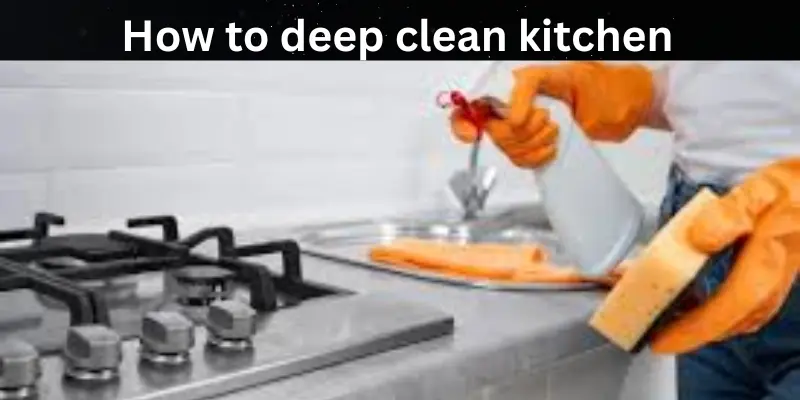
Stoves and cooktops accumulate grease quickly during cooking.
Gas burners and grates should be removed and soaked in hot soapy water before scrubbing. Electric cooktops require gentle cleaning to avoid scratching the surface.
Range hoods and exhaust filters should also be cleaned because they collect grease and dust that can reduce ventilation efficiency.
How to Deep Clean Kitchen Floors
Kitchen floors trap crumbs, dirt, grease, and spills daily. Deep cleaning floors is essential for maintaining overall kitchen hygiene.
Sweep or vacuum thoroughly before mopping. Use suitable floor cleaners based on the flooring material. Tile floors benefit from grout scrubbing using baking soda paste, while hardwood floors require moisture-controlled cleaning methods.
Learning How to deep clean kitchen floors properly improves cleanliness and reduces slip hazards.
How to Deep Clean Kitchen Windows
Kitchen windows often collect grease residue, fingerprints, and dust.
Remove dust from frames and blinds first. Spray glass cleaner evenly and wipe using microfiber cloths for streak-free results. Clean windows improve natural lighting and enhance the kitchen’s appearance.
How to Deep Clean Kitchen Pantry
A pantry should be deep cleaned periodically to improve food organization and prevent pest problems.
Remove all pantry items and inspect expiration dates. Wipe shelves using disinfectant or vinegar solutions. Organize foods into categories and store dry goods in sealed containers to reduce clutter and contamination risks.
Natural Cleaning Solutions for Kitchen Deep Cleaning
Many homeowners prefer natural products when learning How to deep clean kitchen areas safely and affordably.
Baking soda is excellent for scrubbing surfaces and absorbing odors. White vinegar cuts through grease and disinfects naturally. Lemon juice removes stains and leaves a fresh scent. Hydrogen peroxide is another effective natural disinfectant for kitchen surfaces.
Natural cleaners reduce chemical exposure and support environmentally friendly cleaning practices.
Common Mistakes to Avoid When Deep Cleaning the Kitchen
Several mistakes can reduce cleaning effectiveness. One common error is using harsh chemicals incorrectly, which may damage surfaces or create dangerous fumes when mixed.
Another mistake is ignoring hidden areas such as spaces behind appliances and inside cabinets. These neglected areas often collect large amounts of dirt and grease. Failing to clean filters, vents, and drains can also reduce appliance performance and indoor air quality.
Learning How to deep clean kitchen spaces correctly helps avoid these costly and unhealthy mistakes.
Professional Tips for Deep Cleaning Kitchens
Professional cleaners recommend working from top to bottom and focusing on one section at a time. Allowing cleaning solutions to sit before scrubbing improves stain removal and reduces effort.
Using microfiber cloths instead of regular towels improves dirt absorption and prevents streaking. Maintaining a regular cleaning schedule also reduces the need for intensive deep cleaning sessions.
How Often Should You Deep Clean Your Kitchen
The frequency of deep cleaning depends on cooking habits and household size. Most kitchens benefit from a complete deep cleaning every three to six months.
Daily maintenance such as wiping counters and washing dishes helps reduce dirt buildup. Weekly cleaning of appliances and floors keeps the kitchen manageable between major cleaning sessions.
Benefits of Hiring Professional Kitchen Cleaners
Professional cleaning services can save time and provide highly detailed cleaning results. Professionals use specialized equipment and industrial-grade products that remove stubborn grease and hidden dirt effectively.
Hiring experts may be especially useful for large kitchens, post-renovation cleaning, or heavily neglected spaces.
Deep Cleaning Checklist for Kitchens
A kitchen cleaning checklist helps ensure that every area receives attention. Daily tasks include washing dishes, wiping countertops, and sweeping floors. Weekly tasks involve cleaning appliances and mopping surfaces.
Monthly deep cleaning should include cabinets, pantry shelves, refrigerator cleaning, and grout scrubbing. Seasonal deep cleaning may involve moving appliances, cleaning vents, and sanitizing the entire kitchen thoroughly.
Kitchen Organization Tips After Deep Cleaning
Maintaining organization after learning How to deep clean kitchen spaces helps preserve cleanliness longer.
Use labeled storage containers to organize pantry items efficiently. Keep countertops free from unnecessary clutter to simplify daily cleaning. Store frequently used items in accessible locations and maintain a regular decluttering routine.
Eco-Friendly Kitchen Cleaning Practices
Eco-friendly cleaning practices reduce environmental impact while maintaining kitchen hygiene. Reusable microfiber cloths help minimize paper towel waste. Natural cleaning products reduce exposure to harmful chemicals and improve indoor air quality.
Recycling old cleaning containers and conserving water during cleaning sessions also contribute to sustainable household practices.
Summary
Understanding How to deep clean kitchen spaces is essential for maintaining hygiene, improving appliance efficiency, and creating a healthier cooking environment. Deep cleaning removes grease, bacteria, odors, and hidden dirt that regular cleaning often misses.
By following organized cleaning routines, using proper supplies, and maintaining consistent habits, homeowners can keep their kitchens spotless and welcoming throughout the year.
Conclusion
Learning How to deep clean kitchen areas properly helps transform the kitchen into a cleaner, healthier, and more enjoyable space. Deep cleaning improves food safety, eliminates odors, extends appliance lifespan, and reduces pest risks.
A systematic approach combined with regular maintenance makes kitchen cleaning more manageable and highly effective. Whether using natural cleaning methods or professional products, consistent deep cleaning ensures long-lasting cleanliness and comfort in one of the most important areas of the home.
FAQs
1. How long does it take to deep clean a kitchen properly?
A complete kitchen deep cleaning usually takes between four and eight hours depending on the kitchen size and level of dirt buildup.
2. What is the best natural product for kitchen deep cleaning?
White vinegar and baking soda are among the best natural cleaners for removing grease, stains, and odors.
3. How often should kitchen appliances be deep cleaned?
Most kitchen appliances should be deep cleaned every one to three months for optimal performance and hygiene.
4. Can I deep clean my kitchen without chemical cleaners?
Yes, many natural products such as lemon juice, vinegar, and baking soda work effectively for kitchen deep cleaning.
5. Why does my kitchen still smell after cleaning?
Lingering odors may come from drains, garbage disposals, hidden food residue, or dirty appliance filters.
6. What should be cleaned first during kitchen deep cleaning?
Start from the top areas such as ceilings, vents, and cabinets before moving down to countertops, appliances, and floors.





- Be Respectful
- Stay Relevant
- Stay Positive
- True Feedback
- Encourage Discussion
- Avoid Spamming
- No Fake News
- Don't Copy-Paste
- No Personal Attacks
- Be Respectful
- Stay Relevant
- Stay Positive
- True Feedback
- Encourage Discussion
- Avoid Spamming
- No Fake News
- Don't Copy-Paste
- No Personal Attacks
